
Choose an AI service. ChatGPT and Perplexity submit the summary request, Grok opens it ready to send, and other services open with the request copied as a fallback. If an AI cannot open the page, copy the article text and paste it into the chat.
SEO in 2026 is the practice of making a brand retrievable and citable inside AI-generated answers, where traditional ranking survives as the entry ticket rather than the prize. The discipline keeps its core machinery (crawlable pages, structured data, indexable facts) because every grounded language model still resolves queries through retrieval APIs that lean on conventional web indexes, yet the surface that converts that machinery into visibility has changed. Gartner forecast in February 2024 that traditional search engine volume would fall 25% by 2026 as chatbots and virtual agents absorbed query share, and Ahrefs measured a 58% click-through reduction for position-one pages under AI Overviews by December 2025, up from 34.5% in April 2025. This guide maps what SEO looks like now: why AI search became the new SEO, what AI visibility actually measures, how the retrieval stack decides who gets cited, the winner-take-most economics of position zero, entity-level brand building, agentic commerce flows, and the failure modes that erase visibility without warning.
Why AI Search Is the New SEO
AI search replaced the results page as the primary discovery surface because answer engines now absorb queries that a ranked list used to monetize, and the scale numbers make the shift structural rather than experimental. Google’s AI Overviews crossed 2.5 billion monthly users, Google’s AI Mode passed 1 billion monthly active users by May 2026, and ChatGPT reached 800 million weekly users in October 2025 before climbing toward 900 million by February 2026.
| AI search surface | Reported scale (2026) | Unit of visibility |
|---|---|---|
| Google AI Overviews | 2.5B+ monthly users | Cited source inside summary |
| Google AI Mode | 1B+ monthly users (May 2026) | Conversational citation |
| ChatGPT | 800M weekly (Oct 2025), then ~900M (Feb 2026) | Brand mention in answer |
| Perplexity | ~45M monthly actives entering 2026 | Cited link cluster |
| Microsoft Copilot | ~13% of AI-chat share | Answer plus checkout eligibility |
The mechanics carry through unchanged. Content still gets crawled, parsed, chunked, and matched against intent. Entities still get disambiguated against a knowledge graph. Relevance still rewards information gain over word count. What changed is where the reward lands: a page that ranks first no longer collects a click by default. It collects eligibility for a citation that a model may or may not display.
Not everyone accepts the decline framing. Search Engine Journal published seven documented reasons to doubt the 25% projection, including Bing Chat’s failure to peel meaningful share from Google and the methodological difficulty of comparing chatbot sessions with search queries. That skepticism is legitimate. It does not, however, reverse the measured click data covered in the next section.
What AI Search Visibility Actually Measures
AI search visibility measures presence inside generated answers rather than position on a results page, and it is a portfolio metric because engines draw from separate source pools. 5WPR’s 2026 analysis found only about 11% of domains are cited by both ChatGPT and Perplexity, and Otterly’s study of more than 1 million AI citations across January and February 2026 confirmed platform-specific citation behavior. A brand can dominate one engine and disappear from another on the same day.
That fragmentation changes reporting. Rank tracking reported a single number for a single index. AI visibility instead requires sampling each engine’s answer pool, counting mentions, and weighting mentions differently from cited links. Mentions build brand recall even without a click. Citations build referral traffic. Both belong in the same dashboard, tracked separately.
Why the Core Retrieval System Still Decides Who Wins
Retrieval decides who gets cited because every grounded LLM answers from context it fetches at query time, and the dominant fetch routes still resolve against conventional web indexes. Models ship with training cutoffs, which means anything after the cutoff arrives through a search call rather than from memory. That includes prices, availability, regulations, release dates, and breaking news.
The Retrieval Stack Behind Grounded Answers
Search APIs split into two families, and the split explains why classic SEO never stopped mattering.
| API family | Examples | What it queries | SEO dependency |
|---|---|---|---|
| SERP scrapers | SERPapi, Serper, SearXNG | Google and Bing result pages as structured JSON | Total: your Google rank is your inclusion |
| Neural / AI-native | Tavily, Exa, Firecrawl | Semantic index, answer-shaped snippets, extracted markdown | Partial: relevance plus readability |
| First-party | Brave Search API, Bing API | Own crawled index | Partial: non-Google corpus |
Brave’s 2026 API guide describes Serpapi and Serper as tools that “query a Big Tech index” and return structured results, while Exa and Tavily rely on neural retrieval for semantic discovery. When an agent calls Serper to research a topic, Google’s first page becomes the agent’s entire universe, and that universe has a hard boundary at position one.
What Position One Is Now Worth
Position one lost roughly 58% of its click value. Ahrefs sampled 300,000 keywords using aggregated Google Search Console data and found position-one CTR on AI Overview keywords fell from 0.073 in December 2023 to 0.016 in December 2025, against a forecast of 0.037 had AI Overviews never launched.
TEXTPosition-one CTR, AI Overview keywords (Ahrefs, aggregated GSC)
Dec 2023  ████████████████████████████  0.073
Dec 2025  ███████                       0.016
Forecast  ██████████████                0.037  (no AI Overviews)
SparkToro recorded a 68.01% zero-click rate across Google searches in the first four months of 2026, up from roughly 60% in 2024. The ranking incentive has inverted: first place earns eligibility to be summarized, and second place earns almost nothing, because the summary consumes the click that position two once collected.
Google pushed back on one popular shortcut. On June 15, 2026 the company updated its AI optimization guide stating that llms.txt files have no effect on AI Overviews or AI Mode rankings, and roughly one in ten sites has adopted the format. Google’s generative AI search features continue to rely on standard SEO signals.
The Winner-Take-Most Economics of Position Zero
AI summaries convert the search results page from a ranked list into a single answer, and the answer’s citation slot performs the job the top link used to perform. Pew Research Center tracked 68,879 Google searches from 900 U.S. adults in March 2025 and found clicks on traditional result links fell to 8% of visits when an AI summary appeared, versus 15% without one. Clicks on the links cited inside the summary itself occurred in just 1% of visits.
Three behaviors compound the squeeze:
- Sessions end at the summary. Users abandoned browsing entirely on 26% of visits with an AI summary, compared with 16% on pages showing only traditional results.
- Sources concentrate on a small set of domains. Wikipedia, YouTube, and Reddit together accounted for 15% of sources cited in AI summaries, meaning encyclopedic and community domains rather than generic commercial blogs.
- ChatGPT rewards encyclopedic content most. Otterly’s 2026 analysis attributed 8.2% of ChatGPT’s top-50 cited domains to Wikipedia alone.
The contrast with the 2025 playbook is sharp. A comprehensive 3,000-word guide that once won through sheer coverage. The same guide now competes for a single citation slot against Reddit threads and Wikidata entries. Depth still influences selection, but it selects for information gain rather than length. So you must aim to be the source for all service related information.
Building a Brand Entity So People See It
Making a brand large as an entity, rather than merely optimizing a URL, is what increases the odds of being named in an answer. Search and answer engines resolve queries against entities such as a brand, a person, or a product, each carrying attributes and corroborating references. That structure explains why ambiguity suppresses citation. When an engine cannot cleanly distinguish your brand from a similarly named company, it defaults to a safer source.
Entity work concentrates on four levers:
- Unambiguous identification. Organization and Product schema with
sameAsproperties connecting the entity to its Wikidata item, LinkedIn, Crunchbase, and official profiles. ThesameAsgraph does the connective work that ties the entity to external corroboration. - Consistent stated facts. One canonical set of numbers (founding year, headquarters, category, pricing bands) repeated across owned properties and third-party profiles. Conflicting attributes split the entity.
- Third-party corroboration. Independent mentions on domains the engines already trust. Citation pools skew toward Wikipedia, Reddit, YouTube, and established publications, so earned presence there carries disproportionate weight.
- Machine readability. Structured data, clean HTML, and explicit numeric answers on the pages retrieval tools extract.
The KPIs That Replaced Rank Tracking
Rank position alone no longer reports whether anyone sees you, it is still valuable but track these instead:
| KPI | What it answers | Typical source |
|---|---|---|
| Mention rate | How often engines name the brand unprompted | LLM monitoring tools, KWfinder |
| Share of model | Brand mentions as a share of all category mentions | AthenaHQ, LLM Pulse, Profound |
| Citation coverage | Which URLs and engines cite the domain | Citation analysis (Otterly, Semrush) |
| Branded search volume | Whether AI exposure drives demand | Search Console, Google Trends, Google Ads Planner |
| Sentiment in answers | How engines characterize the brand | API Answer sampling |
Semrush notes that rising branded search indicates growing awareness that may trace back to LLM exposure, which makes it a useful proxy when direct attribution stays murky. Generally consider a better third party analytics like a rybbit as it is cookieless and gives you more data.
Agentic Flows: When the Buyer Never Opens a Browser Tab
Agentic commerce removes the visit entirely and is just around the corner, routing discovery, selection, and purchase through an assistant, so product data quality becomes the conversion lever. OpenAI and Stripe open-sourced the Agentic Commerce Protocol under Apache 2.0 to power Instant Checkout in ChatGPT, and Forrester documented Stripe and Microsoft launching Copilot Checkout for select merchants. In these flows, a well-structured feed and accurate inventory data determine whether an agent can transact at all.
The upside is measurable. Adobe Digital Insights reported AI-sourced traffic to U.S. retail sites grew 393% year over year in Q1 2026, and in March 2026 that traffic converted 42% better than non-AI traffic, a reversal of earlier findings. Adobe’s August 2026 report put the AI conversion advantage at 60% higher.
The counter-evidence deserves equal weight. Kaiser et al. (2026), published in Marketing Science, analyzed 973 online stores and roughly 50,000 ChatGPT-generated sessions. LLM-originating traffic converted above paid social but below every other traditional channel, and ChatGPT referrals accounted for about 0.2% of sessions. A Walmart executive reported selections purchased directly inside ChatGPT converting at roughly one-third the rate of products requiring a click out to the merchant. Channel value depends heavily on category and on whether the merchant implemented checkout infrastructure.
Where AI Visibility Strategies Break Down
Failures cluster in four predictable places, and each one is avoidable.
- llms.txt theater. Publishing the file consumes effort that produces no ranking or citation lift, per Google’s June 2026 guidance, while roughly 90% of the web has skipped it. Fix crawlable HTML and structured data first.
- Indiscriminate crawler blocking. Cloudflare customers blocked 416 billion AI bot scraping requests in the five months after July 1, 2026, and AI bots made up 32.49% of verified-bot requests in Q3 2026. From September 15, 2026, Cloudflare applied restrictive defaults to multi-purpose crawlers based on their most restrictive behavior, a setting that can inadvertently block search fetchers alongside training crawlers. Blocking training data is a legitimate negotiation. Blocking retrieval kills visibility.
- Content decay. Post-cutoff facts rot fastest. Outdated figures inside an entity profile contaminate every downstream answer that cites it, because retrieval surfaces the stale number with the same confidence as the fresh one.
- GEO mythology. Teams adopt tactics that echoed on social platforms, such as keyword-stuffed variants and thin AI-spun pages at volume, while the engines weight corroborated entities and structured facts. Google’s September 2026 spam update targeted exactly this pattern.
Adjacent problems deserve their own line item. The economics of content access remain unresolved: Google’s AI contribution pilot delivered publishers roughly one-tenth of one percent of ad revenues, a return that makes opt-in participation hard to justify, while Cloudflare’s pay-per-crawl model lets publishers meter crawler access directly.
Extending the Retrieval Argument
The next decision point sits at the intersection of crawler economics and agent permissions: whether your content is available to retrieval, at what price, and under which protocol. Cloudflare’s pay-per-crawl framework, the Agentic Commerce Protocol specification, and each engine’s evolving source preferences form a negotiation layer that did not exist when SEO meant ranking pages. Teams that operate this layer deliberately, by pricing crawl access, publishing machine-verifiable product feeds, and maintaining an entity graph that survives retrieval, hold visibility as answer surfaces multiply.
Why Content Quality Beats Lengt
One of the most persistent misconceptions in SEO is the idea that longer content equals better rankings. The truth? Google and other search engines prioritize content that effectively answers user queries, whether it’s 200 Words or 2,000. It’s not about hitting a magic number; it’s about relevance, depth, and clarity.
The Misconception of Word Count as a Ranking Factor
Google has repeatedly stated that content length is not a direct ranking factor. Yet, some SEO professionals still believe longer content performs better. In reality, what matters is how directly and effectively your content answers the user’s query. Word count is secondary.
Take, for example, Google’s focus on passage ranking, an AI system that extracts relevant sections from web pages to display in search results. This system underscores that quality trumps quantity. If a 300-word section answers a user’s question better than a lengthy article, it’s that section Google will prioritize.
The Importance of Content Depth
While length alone doesn’t determine rankings, content depth is a crucial factor. Deep content isn’t just long; it’s comprehensive. It answers all relevant questions on a topic, provides unique insights, and goes beyond what competitors offer.
How to Measure and Improve Content Depth:
- Answer Customer Questions: Start by understanding your audience. Speak to your sales or support teams to identify common customer queries. Is your content answering these questions in full?
- Review Competitors: Analyze the top-ranking articles for your target keywords. Are there gaps in the content that you can fill? Tools like Clearscope or MarketMuse can help you evaluate how in-depth your content is compared to your competitors.
- Add Unique Value: Don’t just regurgitate what others are saying. Add your own unique insights, data, or case studies. Information gain: adding something new to the conversation, is a key factor in differentiating your content.
Why Direct Answers Matter More Than Length
In the era of semantic search, where search engines understand the meaning and intent behind queries, clarity and directness are more important than ever. Fluff or padding to increase word count can hurt your content’s performance.
Consider simplifying your writing. A concise, clear answer not only makes it easier for users to understand but also for search engines to interpret the relevance of your content.
For example, take a wordy description:
“Our SEO consulting business helps elevate your brand presence, ensuring better visibility across search engine results through meticulous keyword strategies and expert-driven methodologies.”
Now, let’s simplify it:
“We provide SEO consulting to improve your search rankings through effective keyword strategies.”
Both say the same thing, but the second version is clearer and easier for both users and search engines to process.
High-Quality Content: What Does It Mean?
In the digital age, the term “high-quality content” has emerged as a cornerstone of effective communication and engagement across various platforms. This concept goes beyond mere information dissemination; it emphasizes the importance of substance, clarity, and relevance in connecting with audiences. High-quality content is characterized by its ability to inform, entertain, or inspire while maintaining authenticity and value.
It often incorporates elements such as thorough research, a clear understanding of the target audience, and an engaging presentation style. As businesses, educators, and content creators strive to stand out in a crowded digital landscape, understanding what constitutes high-quality content has never been more crucial. In the following sections, we will explore the key characteristics that define high-quality content, its benefits, and strategies for creating it effectively.
Characteristics of Quality Content
Quality content encompasses several key characteristics essential for effective communication and audience engagement. It must prioritize user intent, delivering in-depth information that addresses the specific needs and interests of the target audience as well as the overall structure of the content. Conducting regular audits and updates is crucial to maintaining relevance; this process ensures that content remains fresh and aligned with current trends and user expectations.
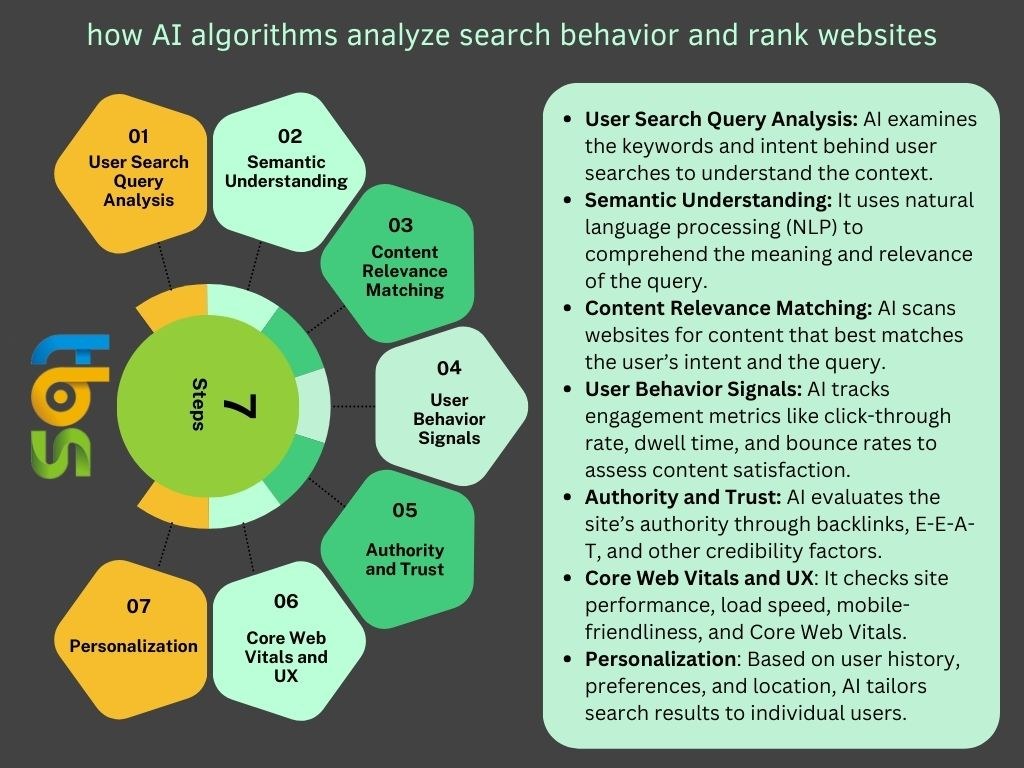
Moreover, integrating multimedia elements such as images, videos, and infographics significantly enhances engagement and aids in the conveyance of complex information. This multimedia integration enriches the user experience, making content more visually appealing and easier to digest.
In today’s digital landscape, Google emphasizes concise yet informative content that provides dense information efficiently. This approach not only aligns with SEO strategies but also boosts readability and audience retention. By focusing on these characteristics: content quality, user intent, and multimedia integration, content creators can produce material that resonates with readers and meets the evolving demands of search engines.
Tools and Techniques for Better Content
The SEO landscape with AI tools democratized is different, the right tools measure content quality, AI detection, human effort and are essential. Tools like Clearscope, Surfer SEO, or MarketMuse analyze top-performing content in your niche and help you optimize for relevance and depth.
Content Tools to Consider:
- Clearscope: Provides a content score by analyzing the most relevant terms in top-ranking articles.
- Surfer SEO: Helps you understand the competitive landscape and optimize for on-page factors like keyword usage and structure.
- MarketMuse: Offers in-depth analysis on content gaps and opportunities for information gain.
The Role of AI in Content Creation
With AI tools like ChatGPT and Google’s Gemini becoming more common, content creation has been accelerated, but it comes with risks. AI can help generate ideas or create drafts, but human oversight is crucial to maintain accuracy, tone, and originality. LLMs still predict the next most likely word, so uniqueness is an issue.
Avoid relying too heavily on AI for content creation. Instead, use it as a supplement, with humans handling the final review and edits to ensure the content reflects your brand’s voice and resonates with your audience.
Avoiding Content Decay
As content ages, it can lose relevance; this is known as content decay. Regularly updating your content is essential for maintaining its SEO value. Outdated statistics, broken links, or irrelevant information can hurt your rankings.
How to Prevent Content Decay:
- Audit Your Content: Periodically review your existing content for accuracy and relevance.
- Update or Repurpose: Refresh old posts with new data, examples, or insights. Alternatively, repurpose older content into new formats, such as videos or infographics.
- Monitor Analytics: Track performance to identify content that is declining in traffic and update it accordingly.
The SEO Landscape in 2027: What to Expect
Looking ahead, expect AI to be the default search and more heavily integrated into your devices. Grok Bot, Dots, GPT Astra will continue to gain market share as users are lazy, so aligning with intent behind queries, meaning content relevance and direct answers will remain critical.
Key Trends for 2027
Online presence is increasingly shaped by key trends like E-E-A-T (Experience, Expertise, Authoritativeness, Trustworthiness), which plays a critical role in search rankings. Websites demonstrating high E-E-A-T provide trusted, valuable content, which search engines favor. Combining this with AI-powered SEO, businesses can create customized, quality content that meets user needs and surpasses the quality thresholds google expects.
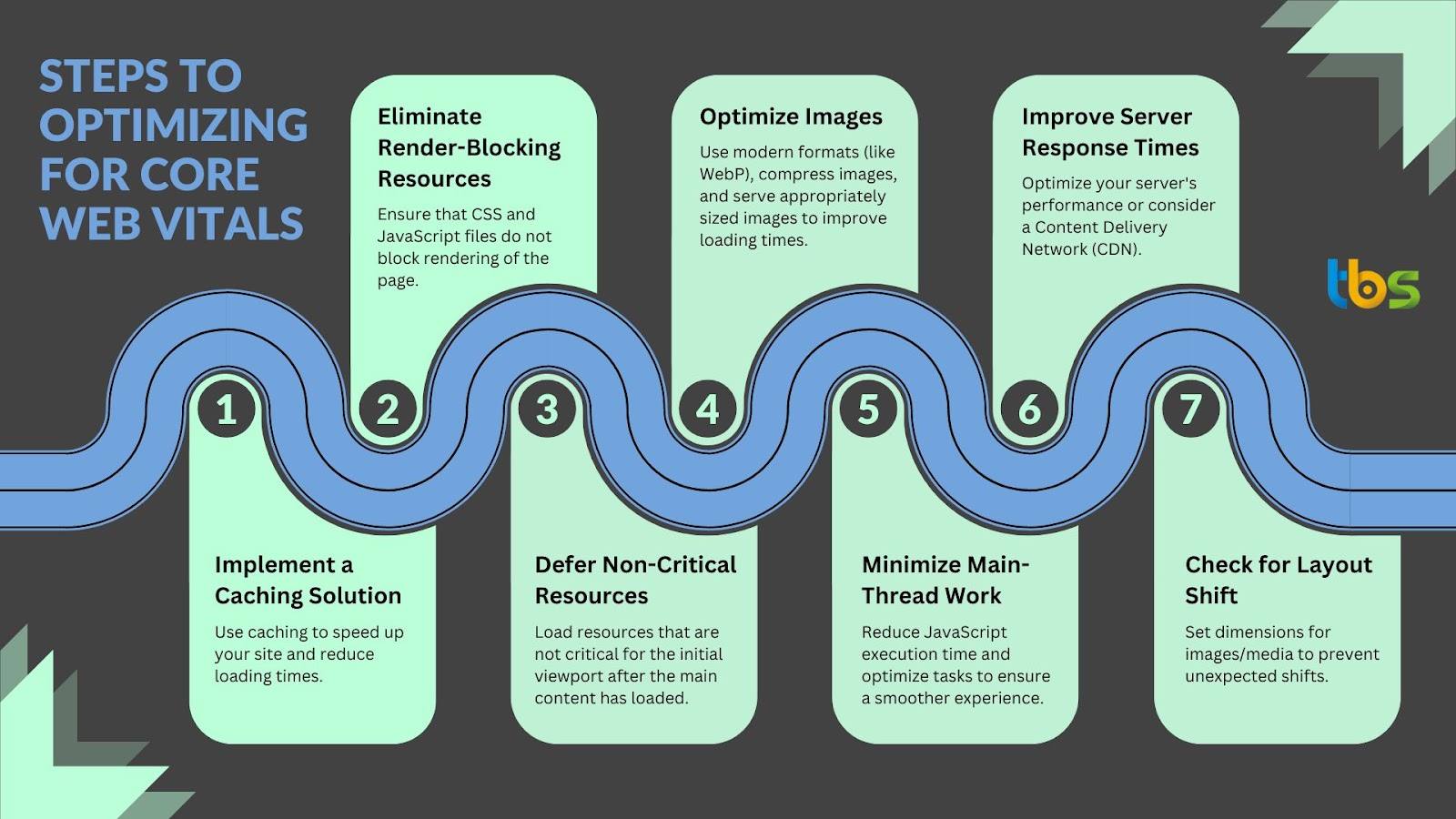
Additionally, optimizing for Core Web Vitals, mobile compatibility, and multimedia SEO is essential for enhancing user experience, leading to improved engagement and rankings across various devices in a competitive digital market.
Conclusion
As we move into 2027, the focus should be on creating brand entities that provides value, not just a top ranking website, be where your audience is and answer every intent. Whether it’s 300 words or 3,000, your content needs to answer the user’s question effectively, clearly, and comprehensively. Use the right tools, involve human oversight, and continuously refine your content to stay ahead in an ever-evolving SEO landscape.
Sign in to share. Facebook and LinkedIn need the article page to be publicly accessible to show its preview. If an AI cannot open the page, copy the article text from the section above.