
Choose an AI service. ChatGPT and Perplexity submit the summary request, Grok opens it ready to send, and other services open with the request copied as a fallback. If an AI cannot open the page, copy the article text and paste it into the chat.
Pay-per-click (PPC) advertising is a paid search model in which you bid for placement on search engines and pay only when a user clicks your ad. Effective PPC keyword research is the practice of choosing the specific search terms that decide where those ads appear, what they cost, and how well they convert. Done well, it makes sure every click is aimed at a buyer with intent, not just traffic.
This guide answers what effective PPC keyword research looks like in practice: how to define your own term, which keyword types and metrics matter, a step-by-step process from goals to negative keywords, the tools worth using, and how to turn a keyword list into profitable campaigns. If you are a content marketer, SEO professional, business owner, or entrepreneur, it gives you a repeatable method rather than one-off tricks.
What Is PPC Keyword Research?
PPC keyword research is the process of identifying, evaluating, and selecting keywords that will drive clicks and conversions for PPC ad campaigns. It involves finding keywords that are not only relevant to your product or service but also have the potential to drive profitable traffic.

Types of Keywords in PPC
| Keyword type | What it captures | Typical cost | Best for |
|---|---|---|---|
| Broad match | Wide audience, loosely related searches | Lower CPC | Discovery and early testing |
| Phrase match | Searches that include the meaning of your phrase | Mid CPC | Balancing reach and relevance |
| Exact match | The specific term or its close variants | Highest CPC | High-intent, bottom-funnel buyers |
| Long-tail | Specific multi-word phrases, lower volume | Lower CPC | Niche targeting and cheaper conversions |
| Negative | Searches you explicitly exclude | Zero spend | Cutting wasted spend |
Key Concepts in PPC Keyword Research
When researching PPC keywords, understanding key metrics is essential to selecting the right keywords for your campaign. Here are some important metrics to consider:
- Average Monthly Searches: This metric tells you how many times a keyword is searched in a month. It helps you gauge demand for the keyword and understand its potential for driving traffic. For example, if a keyword like “best running shoes” has a high search volume, it’s likely to generate more clicks, but it could also face more competition.
- Cost-per-Click (CPC): CPC represents the price you pay for each click on your ad. It’s vital to understand how much you’re willing to spend to acquire a visitor. Competitive keywords might have a higher CPC, so knowing this helps you determine your budget and bid strategy. You can learn more about how SEM differs from SEO here. For instance, “luxury watches” may have a higher CPC compared to more niche terms like “affordable watches for men.”
- Competition: This indicates how competitive a keyword is, based on how many other advertisers are bidding for it. High competition keywords might be harder to rank for, and advertisers might need higher bids to win clicks.
- Top of Page Bid: This metric provides a range of what you might need to bid in order to have your ad appear at the top of the search results. For example, if you’re bidding for the keyword “SEO services,” but the top of page bid is $5, you should plan your bids accordingly to maximize ad placement.
Why PPC Keyword Research Matters
Before diving into the “how-to” of keyword research, it’s essential to understand its importance. Choosing the right keywords affects not only where your ad appears but also how well it resonates with your audience. Effective keyword research for PPC:
Boosting Ad Relevance
A successful PPC campaign depends heavily on its relevance to the audience. Choosing the right keywords ensures your ads appear when users are searching for exactly what you offer, while also boosting your website’s relevance through link-building efforts. This relevance is crucial because it ensures your ad shows up at the right time, for the right person, with the right message.
The more closely your ad matches a user’s search, the better your Quality Score will be. A higher Quality Score can improve your ad placement and lower your cost-per-click (CPC), resulting in better visibility and effective outcomes.
Maximizing ROI
Thorough PPC keyword research plays a major role in boosting your return on investment (ROI). By focusing on high-intent keywords, those that clearly indicate a user is ready to make a purchase or take action, you increase the likelihood of turning clicks into actual sales or leads. These keywords typically signal a user’s readiness to engage with your business, whether that’s through a purchase, sign-up, or another key action. The more specific and targeted your keyword strategy, the better your chances of attracting users who are truly interested, leading to higher conversion rates and a stronger ROI.
Optimizing your ad spend is essential to achieving a higher ROI. By concentrating on high-performing keywords, you can avoid wasting your budget on irrelevant or low-converting terms. Not all keywords produce the same results; some may generate clicks but not drive conversions. Effective keyword research helps you eliminate underperforming keywords and focus your budget on terms that deliver the best returns.
Optimizing Ad Spend
Every dollar matters in PPC, and with limited budgets, it’s crucial to allocate your spend wisely. Optimizing your ad spend means constantly reviewing and refining your keyword strategy to ensure that every click is valuable. This includes identifying and removing negative keywords which are terms that trigger your ads but don’t result in conversions. Regularly adjusting your keyword choices ensures you’re not spending money on irrelevant traffic. Additionally, using long-tail keywords (specific, less competitive phrases) can help lower your CPC while still reaching the right audience, further enhancing your ad spend efficiency.
Seasonal Targeting
Seasonality plays a key role in PPC keyword performance. Certain products or services experience higher demand at different times of the year. By aligning your keyword strategy with these seasonal trends, by using Google Trends or other tools to identify spikes in search volume for seasonal keywords. For example, if you’re in retail, keywords like “Christmas gifts” or “Black Friday sales” become more relevant during the holiday season. Similarly, businesses in the travel or tourism industry should adjust their keywords according to vacation periods, local events, or weather changes.
Seasonal targeting ensures that your PPC ads reach users when they’re most likely to convert. By using seasonally relevant keywords, you can take advantage of spikes in demand, driving more traffic when it counts the most.
By the end of this article, you’ll be equipped with the techniques, tools, and insights to find, analyze, and apply PPC keywords effectively.
Step-by-Step Guide to Effective PPC Keyword Research
1. Set Clear Campaign Goals
Establishing clear goals sets the foundation for effective keyword research. Determine the primary objective of your PPC campaign: Is it brand awareness, lead generation, or direct sales? Your goals will influence the types of keywords you choose.
2. Identify Your Target Audience
Define your target audience by understanding their demographics, interests, and search behavior. Knowing who your audience is will help you align your keywords to their needs and search habits.
3. Use Brainstorming to Generate Initial Keyword Ideas
Start by brainstorming a list of keywords related to your products, services, or industry. Consider:
- Product features and benefits
- Common customer pain points
- Brand-specific keywords
Example: If you run an online clothing store, initial keywords might include “affordable men’s jackets” or “women’s summer dresses.”
4. Analyze Competitors’ Keywords
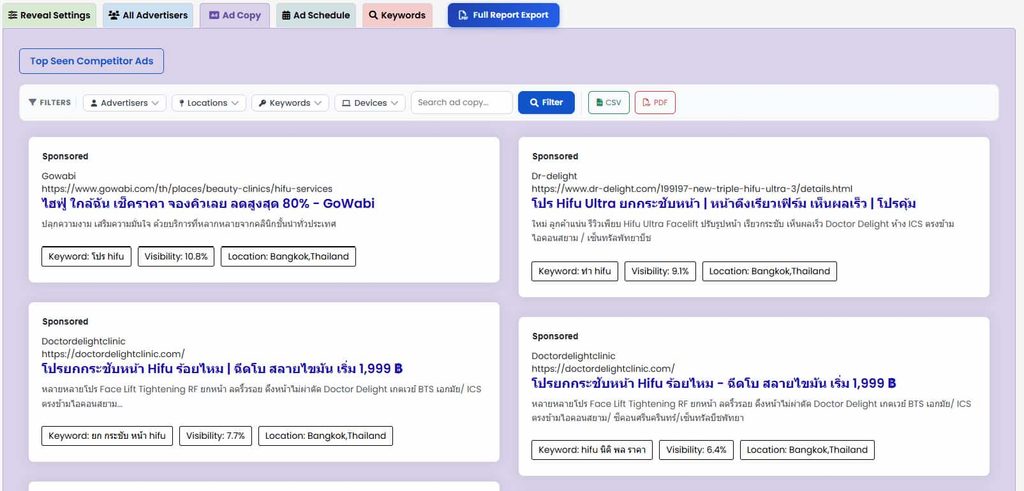
Competitor analysis offers valuable insights into keywords that are already performing in your niche. Tools like SEMrush, Ahrefs, or SpyFu allow you to analyze your competitors’ PPC keywords and identify gaps in your own keyword strategy. At TBS Marketing, we use our own tool for this which will look up search terms and collect the companies running ads, what their ads are, when they ran etc.
5. Use Keyword Research Tools
PPC keyword research tools are essential for obtaining search volumes, cost-per-click (CPC) estimates, and competitive data. Here are some of the best tools:
- Google Keyword Planner: Provides search volume data and keyword suggestions.
- Moz Keyword Explorer: Helps you find related keywords with SEO and PPC potential.
- Ubersuggest: Offers keyword ideas with CPC and competition data.
Pro Tip: Combine data from multiple tools to validate keyword performance metrics.
Seasonal Keyword Targeting and Tools
Seasonal trends can greatly impact PPC keyword performance. For example, if you’re in the retail industry, you might see a surge in searches for “Christmas gifts” during the holiday season. Here’s how to optimize for seasonal keywords:
- Google Trends: Use Google Trends to identify spikes in search volume for seasonal keywords. You can track how interest in certain products or services rises and falls throughout the year, allowing you to adjust your bidding and targeting strategy accordingly.
- Historical Data: Review your previous campaigns to see which keywords performed best during specific times of year. For example, if you sell winter coats, keywords like “buy winter coats online” may see higher traffic in the fall or early winter months. Use this data to refine your keyword list for the upcoming season.
- Seasonal Keyword Modifiers: Add seasonal modifiers to your keywords to capture more targeted traffic. For instance, if you sell swimwear, targeting keywords like “summer swimwear sale” or “best swimsuits for 2026” can attract users who are searching specifically for those seasonal items.
Evaluating and Organizing Keywords for PPC Campaigns
1. Assess Keyword Intent
Keyword intent is critical to PPC success. Determine whether a keyword is informational (research-focused), navigational (brand-focused), transactional (buy-focused), or commercial (consideration-focused).
Example: A keyword like “buy running shoes online” has transactional intent, making it ideal for PPC campaigns focused on direct sales.
2. Calculate Keyword Metrics
Metrics such as search volume, CPC, and competition level help in determining whether a keyword is worth bidding on.
- Search Volume: Higher search volumes mean more potential impressions, but they may also indicate higher competition.
- Cost-per-Click (CPC): Understand the cost associated with each click to ensure that it aligns with your budget.
- Competitive Density: High competition often drives up bid prices. Finding low-competition, high-intent keywords can improve ROI.
3. Group and Organize Keywords
Organizing keywords into ad groups based on themes allows for more targeted ad copy and higher relevance. For instance, if you’re advertising sports shoes, you might have separate groups for “running shoes,” “basketball shoes,” and “tennis shoes.”
4. Identify Negative Keywords
Negative keywords are terms that you do not want your ad to show for, helping to reduce wasted ad spend. Regularly reviewing and updating negative keywords based on campaign performance will improve overall ad efficiency.
PPC Keyword Research Tools: A Closer Look
The table below compares the tools most teams actually use, with the strengths that matter when you are building a PPC keyword list rather than an SEO one.
| Tool | Best for | Cost | Standout feature |
|---|---|---|---|
| Google Keyword Planner | Volume and CPC baselines | Free with Google Ads | Direct integration with live campaign data |
| Semrush | Competitor PPC research | Paid | Shows competitors’ paid keywords and ad copy |
| Ahrefs | Competitor and SERP analysis | Paid | Strong paid-keyword overlap data |
| Ubersuggest | Beginners and quick checks | Freemium | Simple interface with keyword ideas |
| SpyFu | Competitor spend history | Paid | Long-running competitor ad history |
1. Google Keyword Planner
Google’s Keyword Planner is a top choice for researching keywords with specific search volume and CPC data. It’s free and integrates well with Google Ads, making it an excellent starting point.

2. SEMrush
SEMrush allows for competitor research, keyword analysis, and position tracking. The “Advertising Research” tool provides insights into competitor PPC campaigns, while the “Keyword Magic Tool” assists in keyword discovery.
3. Ahrefs
Ahrefs offers valuable PPC insights such as keyword volume, cost-per-click, and click-through rates (CTR). The tool’s keyword explorer lets you see keyword trends and suggests potential long-tail keywords.

4. Ubersuggest
With its user-friendly interface, Ubersuggest provides a mix of keyword suggestions, search volume data, and competitive metrics. Ubersuggest’s “Content Ideas” feature also reveals popular content on specific keywords, which can inform ad copy.

5. SpyFu
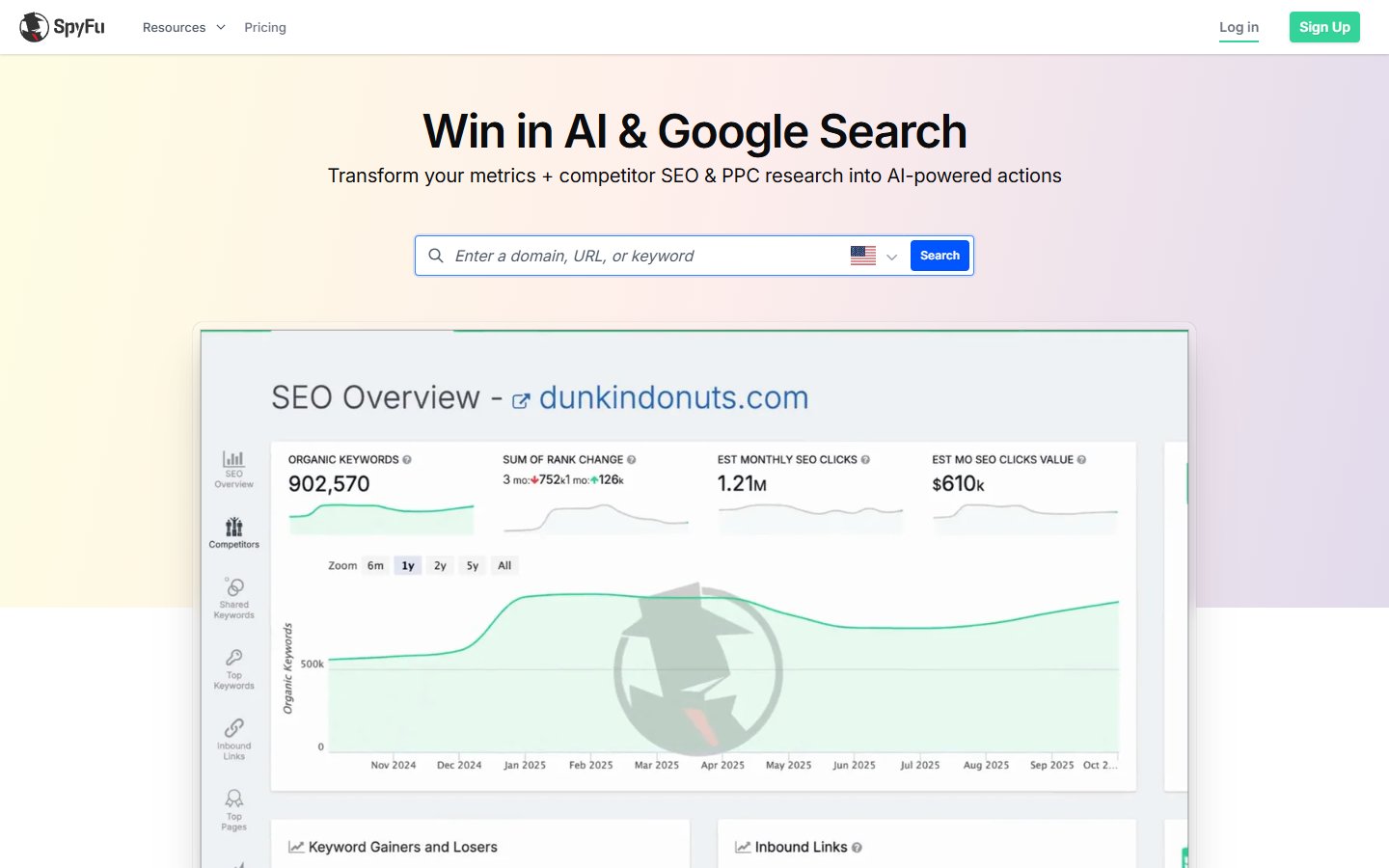
SpyFu is built around competitor history. Where other tools show a snapshot of who is bidding today, SpyFu keeps a long-running record of the keywords a competitor has bought, the ads they ran, and how their spend shifted over time. That makes it useful when you want to find gaps a rival has already proven convert, rather than guessing from scratch.
Practical Examples of Keyword Categories
Understanding the types of keywords to target can improve your PPC campaign performance. Let’s take a closer look at examples for each keyword category:
- Informational Keywords: These are keywords where users are seeking information rather than looking to make a purchase. Example: “What is SEO?” These keywords may not directly result in conversions but can drive traffic to content-rich pages like blog posts.
- Navigational Keywords: Users searching for specific websites or brands use navigational keywords. Example: “Facebook login.” Ads targeting these keywords are typically focused on branded searches.
- Commercial Keywords: These keywords indicate a user is considering making a purchase but hasn’t decided yet. Example: “Best laptops under $500.” It’s a good time to target users with compelling offers that push them toward making a decision.
- Transactional Keywords: These keywords are associated with a high intent to purchase. Example: “Buy iPhone 18 online.” This is where you want to bid higher since these users are ready to convert.
Trends and Future of PPC Keyword Research
- Voice Search Optimization: Voice search is becoming increasingly popular, leading to more natural, conversational keyword phrases. Start integrating voice-friendly keywords into PPC campaigns to stay ahead.
- AI-Driven Keyword Tools: AI tools like ChatGPT and Google’s machine learning algorithms are becoming part of keyword research, enabling more precise targeting.
- Automation and Smart Bidding: Google Ads’ Smart Bidding options use machine learning to adjust bids automatically, helping to maximize conversions.
Actionable Tips for Effective PPC Keyword Research
- Regularly Update Your Keywords: Search trends change frequently. Re-evaluate your keywords monthly to ensure they align with current search behavior.
- Monitor Performance Metrics: Track metrics such as CTR, CPC, and conversion rates to identify high-performing keywords.
- Test Different Match Types: Experiment with broad, phrase, and exact match keywords to understand which drives the best results.
- Use Negative Keywords: Regularly update negative keywords to avoid irrelevant clicks.
Conclusion
Effective PPC keyword research is the foundation of a successful digital marketing campaign. From setting clear goals to leveraging the right tools, every step in the keyword research process enhances your campaign’s performance and boosts ROI. By following the tips and strategies in this guide, you can refine your keyword list, align it with audience intent, and achieve better results.
At TBS Marketing, we specialize in helping businesses unlock their full potential with expertly crafted PPC strategies and keyword research. If you’re ready to elevate your digital marketing efforts, let us manage your Ads for you. With the right approach, your click-through rates can soar, and your campaigns can deliver measurable growth for your business.
FAQs
1. What is the importance of PPC keyword research?
PPC keyword research helps identify keywords with high ROI potential, aligning ad copy with user intent and reducing wasted ad spend.
2. Which tools are best for PPC keyword research?
Popular tools include Google Keyword Planner, SEMrush, Ahrefs, KWfinder and Ubersuggest for comprehensive keyword analysis and competitor insights.
3. How often should I update my PPC keywords?
Aim to review your keywords every month to stay aligned with changing trends and performance metrics.
4. What are negative keywords in PPC?
Negative keywords are terms that prevent your ads from appearing on irrelevant searches, saving ad budget for more targeted keywords.
5. Why is keyword intent important in PPC?
Keyword intent ensures that your ad is shown to users at the right stage of their buying journey, enhancing conversion rates.
6. How do I find low-competition keywords for PPC?
Use keyword tools to identify keywords with lower competition metrics or focus on long-tail keywords to capture niche audiences.
Sign in to share. Facebook and LinkedIn need the article page to be publicly accessible to show its preview. If an AI cannot open the page, copy the article text from the section above.