
Choose an AI service. ChatGPT and Perplexity submit the summary request, Grok opens it ready to send, and other services open with the request copied as a fallback. If an AI cannot open the page, copy the article text and paste it into the chat.
Most businesses pick marketing channels the exact same way: someone reads a case study, a competitor shows up somewhere new, or an agency promises the channel it happens to sell at that time. The decision is then defended for a year because reversing it looks like a failure. This is expensive and foolish.
The better question is not “is this channel good?” but “is this channel good for this business, at this stage, with this offer, against this budget?” A channel that prints money for a DTC skincare brand can lose money for a B2B software company on the same day, and the reverse is just as true.
What follows is a working evaluation of the digital marketing channels a business is realistically choosing between in 2026, plus the new technology changing the math. Each channel is judged on the same criteria: who it suits, what it costs, how it is measured, and when to walk away.
How to Judge a marketing Channel Before You Spend on It
Before comparing channels, settle five questions. Channels that answer all five well deserve budget; channels that answer two are experiments, not strategies.
- Intent match. Does the channel reach people who already want this, or people who might want it? Search captures demand; social creates it. Both work, but only one works for a business with no brand recognition yet.
- Cost of a qualified lead, not a click. Cost per click is a vanity number if the traffic never converts. Track cost per qualified lead or cost per acquisition against gross margin.
- Measurement confidence. Can you see the path from spend to revenue inside the business’s real attribution window, or are you guessing? A channel you cannot measure is a channel you cannot defend or improve.
- Operational load. Creative production, community replies, and reporting all consume hours. A channel that needs daily attention will be abandoned by a one-person marketing team within a quarter.
- Compounding value. Some channels pay once (a display impression). Others leave behind an asset (a ranking page, a subscriber list, a library of creative). Weight the second kind higher when budget is tight.
Run every channel below through these five questions and the right answer usually becomes obvious before the budget conversation starts.
Search: Organic SEO and Google Ads
Organic Search (SEO)
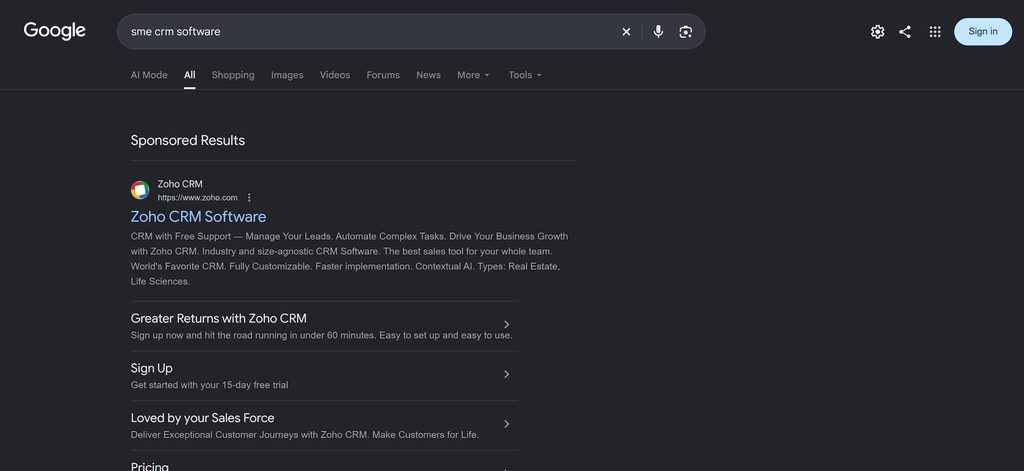
Organic search is the channel that reaches people at the exact moment they describe their problem within engines like Google, Bing, Yahoo, Baidu, DuckDuckGo etc. It is also the slowest to compound and the most exposed to change, because the same AI systems that summarise answers now sit between the searcher and the result with AI mode.
Best for: businesses with a durable informational or commercial need, a content capacity to match the audience and a problem people actively search for. Trades, professional services, healthcare, B2B software and any business whose customers do research before buying will fins Organic Search valuable.
Measurement: rankings and impressions are leading indicators, not results. Track qualified sessions, assisted conversions, and the revenue per landing-page cluster. Use third party tools like rybbit or fathom if you find Google Analytics ineffective because of cookies.
Walk away when: the topic gets no search demand, or the business cannot publish consistently enough for the compounding to ever start.
Google Ads (Paid Search)
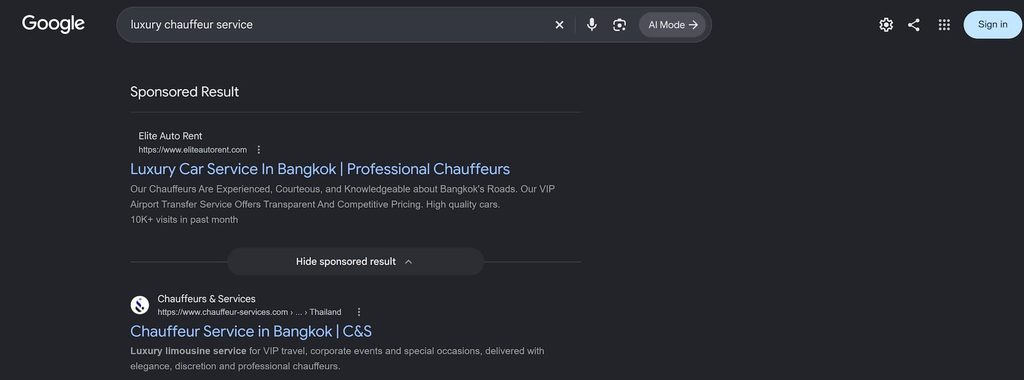
Google Ads buys the demand SEO earns, but today. It is the fastest way to learn whether an offer converts, because intent is already high.
Best for: businesses with a clear, searched-for offer and a conversion path that works. Emergency services, high-ticket services, and e-commerce categories where searchers compare options.
Measurement: cost per acquisition against margin, and search-terms reports to catch wasted spend. A Google Ads account can burn budget on broad match and never show it in the summary metrics.
Reality check: for some B2B categories, LinkedIn has delivered stronger return than Google Search, which means the default choice is not always the best one.
Social: Meta, LinkedIn, TikTok, Pinterest and X
Meta (Facebook and Instagram)

Meta is the strongest channel for creating demand. Its visual formats and reach make it the default for consumer brands.
Best for: e-commerce, DTC, local consumer services, and any offer that benefits from demonstration or lifestyle imagery.
Measurement: creative quality drives most of the result, so test creative continuously and judge on cost per acquisition, not on likes.

LinkedIn targets people by job title, seniority, company size and industry. It is often the only social channel where a B2B offer reaches the person who can actually sign off.
Best for: B2B lead generation, high-ticket products, and professional services where trust and relationship matter.
Measurement: cost per opportunity, not cost per lead. LinkedIn clicks are expensive; the return shows up later in pipeline.
TikTok
TikTok is a discovery channel with a high ceiling and a low floor. Reach can be enormous; so can wasted spend on creative that never lands.
Best for: consumer brands targeting younger audiences, DTC products, and businesses willing to produce native, non-polished video at volume.
Measurement: watch-through rate and cost per acquisition on the small share of creative that actually performs.

Pinterest functions as a visual search and planning engine rather than a social feed. People arrive with purchase intent, often weeks before buying.
Best for: e-commerce with visual catalogue products, interior design and home, weddings, fashion, food, and any business whose customer plans ahead and saves ideas.
Measurement: saves and outbound clicks to product pages, then revenue per saved pin. A catalogue-first setup beats repurposed ad creative.
X (formerly Twitter)

X delivers fast reach and real-time conversation, but volatile audience behaviour and moderation concerns make it a poor default for brand-safe spend.
Best for: media, tech, politics-adjacent industries, and businesses that already have a genuine community there.
Walk away when: brand safety or a target audience that simply is not present outweighs the reach.
Video: YouTube and Short-Form
YouTube is the second-largest search engine and a long-form asset that keeps earning. Short-form video is the top-of-funnel feeder for everything else.
Best for: businesses with a demonstration, a story, or an educational angle. Products that need to be seen to be understood.
Measurement: view-through conversions and assisted conversions, not raw views. A video that gets watched and ignored has failed.
Email and Owned Channels

Email is the channel a business owns outright. No platform change can take the list away, which makes it the safest compounding asset in the stack. It also has some of the highest CTR historically, making it a must for any business.
Best for: every business that captures contact details, and especially those with repeat purchase or long consideration cycles. Any niche where products change often, like AI for example.
Measurement: revenue per subscriber and list growth. Deliverability discipline matters more than send frequency. Make your offer of value before you send it.
Programmatic Display, Affiliate and Influencer
These extend reach and borrow trust, but each carries a specific failure mode.
- Programmatic display is cheap reach with weak intent. Useful for retargeting warm audiences, wasteful for cold prospecting unless tightly controlled.
- Affiliate pays on performance and scales with partners, but attracts deal-hunters and can undercut margin if the commission stack is not managed.
- Consider AutoDS as an easy entry point, as this links with Woocommerce or shopify.
- Influencer borrows an audience’s trust. Strong for consumer discovery, hard to measure, and dependent on genuine fit rather than follower count.
Treat all three as amplifiers of an offer that already converts, never as the thing that makes a weak offer work.
New Technology: ChatGPT Ads and Advertising Inside AI
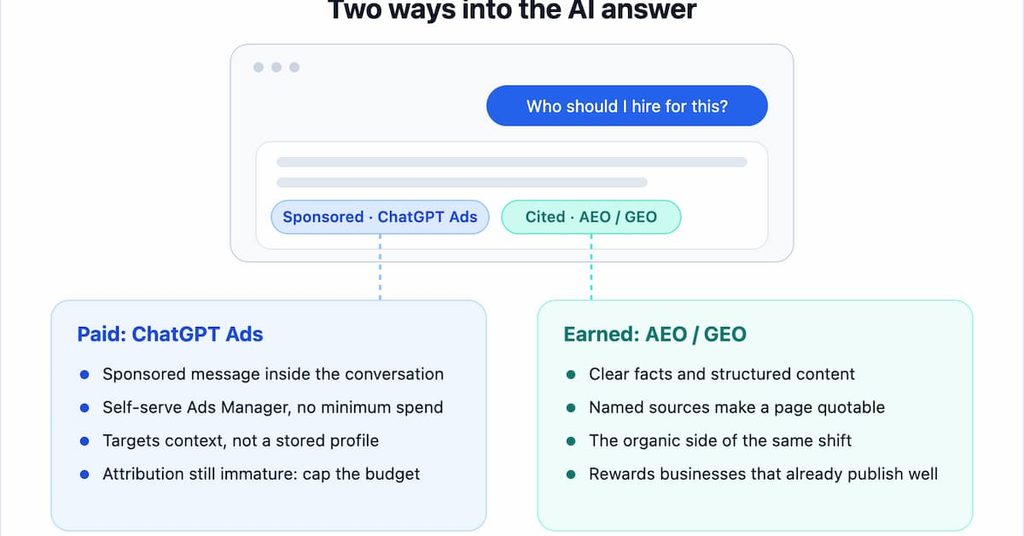
The newest channel behaves differently from everything above. Advertising inside AI assistants, currently led by ChatGPT Ads, places sponsored messages inside a conversation rather than beside a search result or a feed.
What has changed. OpenAI opened a self-serve Ads Manager with no minimum spend, which means a small business can run a campaign that competes on relevance rather than budget. The targeting model shifted from behavioural signals toward context: what the user is asking about, in the moment, rather than a stored profile.
Why it matters. It reaches users at the exact point of a decision, inside the tool they increasingly use to research before acting. For businesses whose customers now ask an assistant “what should I buy / who should I hire”, this is demand they are not otherwise present for.
Best for: businesses with a clear, assistant-friendly offer and buyers who research in chat. Early adopters gain cheap reach while competition is low, exactly as with every new ad platform before it.
The caution. Attribution is immature, formats are still stabilising, and placement inside a conversation can feel intrusive if the ad does not match the question. Treat it as a measurable experiment with a defined budget, not a core channel, until the reporting catches up.
Answer-Engine Optimisation (AEO) and GEO
Alongside paid placement inside AI, a parallel discipline is emerging: getting a business cited by AI assistants rather than advertised to. Clear facts, structured content, and named sources make a page quotable. This is the organic side of the same shift, and it rewards the businesses that already publish well.
Read more about our AIO/AEO/GEO services here.
Which Channels Fit Which Business
The table below is a starting hypothesis, not a verdict. Use it to pick two or three channels to test, then let the business’s own data overrule it.
| Business type | Strongest first bets | Use carefully |
|---|---|---|
| E-commerce / DTC | Meta, Pinterest, email, Google Ads | TikTok (creative volume), affiliate (margin) |
| B2B / SaaS / professional services | LinkedIn, organic search, email | Meta, TikTok |
| Local consumer services | Google Ads, local/organic search, Meta | Pinterest, X |
| Interior design / home / wedding | Pinterest, Instagram, organic search | Paid search (low volume) |
| Healthcare / regulated | Organic search, local, email | Broad social, aggressive retargeting |
| Media / tech / community-led | X, YouTube, email, AEO |
How to Evaluate Any New Channel Before Committing
A new channel appears every few months, and the temptation is to be early. Being early is only an advantage if the spend is controlled. Use the same loop every time.
- Define one measurable goal and the number that counts as success before the first dollar is spent.
- Cap the budget at an amount the business can afford to lose, and treat the first run as paid learning.
- Isolate attribution so results are not credited to other channels by default.
- Judge on qualified outcomes, not impressions, followers, or likes.
- Decide in one review window: scale, iterate, or stop. Channels that survive this loop earn more budget; channels that fail free it up.
The businesses that win are rarely first. They are the ones disciplined enough to test cheaply, measure honestly, and move budget toward what works.
Putting It Together
But there is no one channel that is the answer. And there is no marketing strategy that never stops being efficient. The secret is in continuous evaluation of the effectiveness of the channels used. ChatGPT Ads is just the latest channel to consider. But it won’t be the last. Reddit was once a channel that provided opportunities for achieving Google rankings, but this has become history. Public Notebooks on NotebookLM was once a channel that was able to rank for very competitive keywords, but this is not happening anymore. Backlinks was the single criterion for SEO rankings once, but now it is not enough.
The choice of channels should be made through testing and analysis of performance data. For more insight into developing an effective approach, explore TBS Marketing’s content and channel strategy services or talk to the team about your situation.
Sign in to share. Facebook and LinkedIn need the article page to be publicly accessible to show its preview. If an AI cannot open the page, copy the article text from the section above.