Choose an AI service. ChatGPT and Perplexity submit the summary request, Grok opens it ready to send, and other services open with the request copied as a fallback. If an AI cannot open the page, copy the article text and paste it into the chat.
Local SEO is the practice of optimizing a business so it appears in location-based search results, such as Google Maps and the Google Local Pack or Apple Maps, Bing Maps etc., when nearby customers search for its products or services. Unlike general SEO, which competes nationally or globally, local SEO is won or lost on three factors outside a single webpage: relevance, proximity, and prominence. This article explains what local SEO is, how it works, which businesses benefit most, and the steps that move a business into the map results customers actually click.
How Local SEO Works: From Location-Based Searches to Customer Visits
Local SEO connects a business with people searching for products or services in a defined geographic area. Google uses information from a business website, its Google Business Profile, Google Maps, directories, reviews, and other online references to decide which businesses best match a location-based search. A strong local presence therefore depends on more than adding a city name to a webpage; it requires a coordinated effective SEO strategy that aligns business information with customer intent.
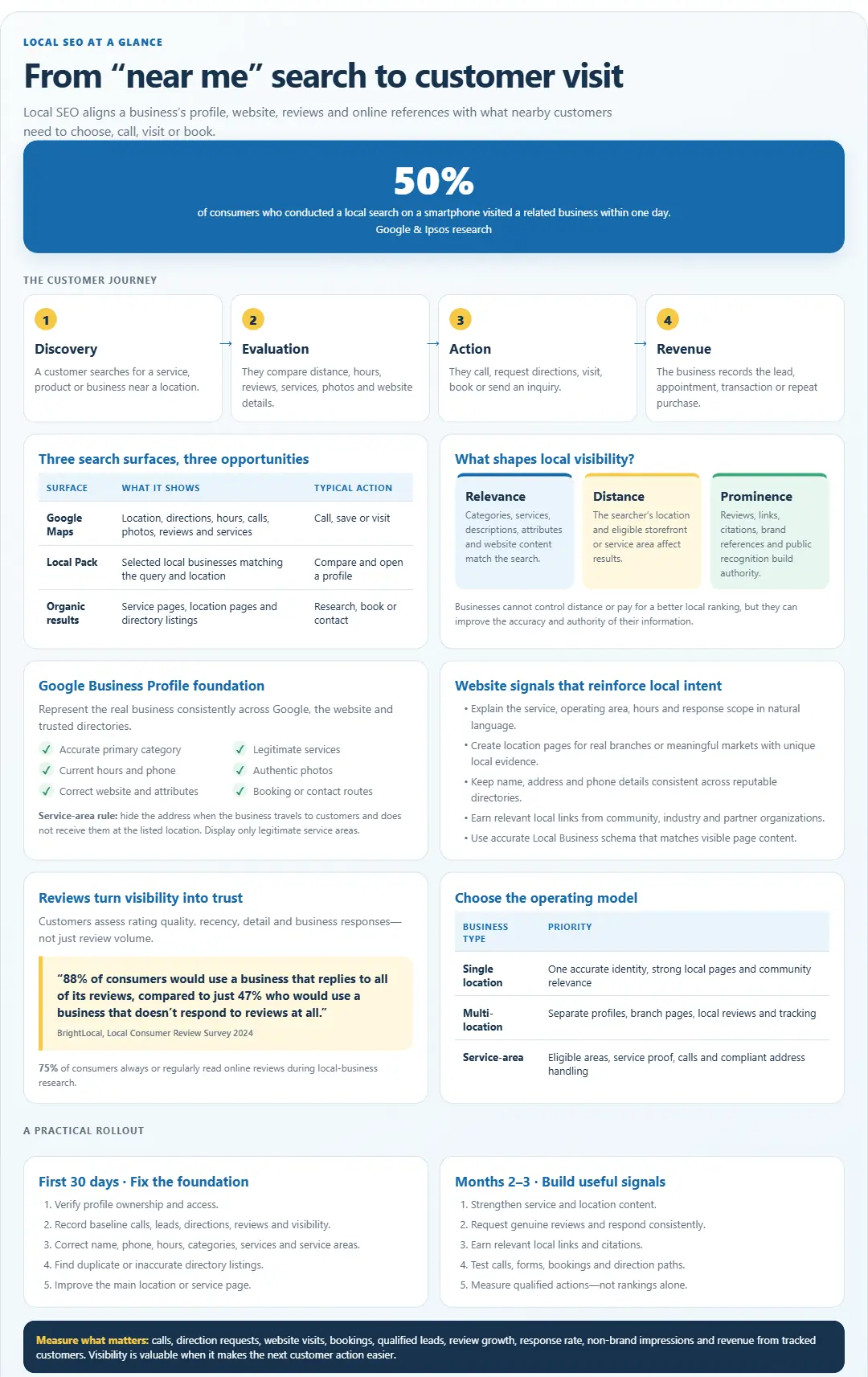
Local searches often lead to action quickly. Google and Ipsos research published by Think with Google found that 50% of consumers who conducted a local search on a smartphone visited a related store or business within one day. The same research found that one in three smartphone searches related to an in-store purchase happened immediately before the consumer visited a store.
Businesses can support this journey through accurate listing data, useful location pages, relevant services, trustworthy reviews, and technically clear websites. A company that sells “emergency plumbing” in a specific city, for example, should make that service, location, phone number, hours, and response area clear across its major digital properties.
How do Google Maps, the Google Local Pack, and organic results differ?
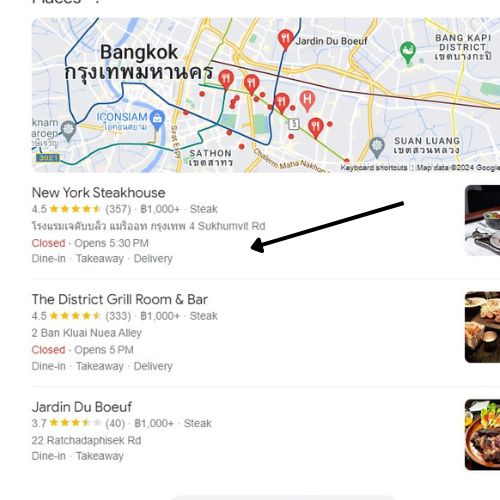
Google Maps displays businesses on an interactive map and business profile interface, while the Google Local Pack shows a compact group of local listings within standard Google Search results. Organic results are the unpaid webpages that appear below or around local features. These surfaces overlap, but they do not represent the same visibility opportunity.
| Search surface | Primary information shown | Typical customer action |
|---|---|---|
| Google Maps | Business location, directions, hours, calls, photos, reviews, and services | Request directions, call, save, or visit |
| Google Local Pack | Selected local businesses matching the search and location | Compare options and open a profile |
| Organic results | Website pages, service pages, location pages, and directory listings | Research, compare, book, or contact the business |
Google Business Profile data feeds important parts of Maps and Search, while website content and links contribute more directly to organic visibility. A business may appear strongly in organic results but weakly in the Local Pack, or receive Maps actions without ranking prominently for broad service terms.
How do relevance, proximity, and prominence influence local rankings?
Google says local rankings primarily reflect relevance, distance, and prominence. Relevance measures how closely the business matches the search; distance measures how near the business is to the searcher or requested location; prominence reflects how well-known or authoritative the business appears online. Google Business Profile Help identifies these three factors as the main components of local ranking.
- Relevance: Complete categories, services, descriptions, website content, and accurate attributes help Google interpret the business.
- Distance: The searcher’s location and the business’s eligible service or storefront area affect which results appear.
- Prominence: Reviews, links, citations, brand references, and broader public recognition contribute to perceived visibility.
No business can control distance, and Google states that companies cannot pay to obtain a better local ranking. Businesses can, however, improve the accuracy and authority of their information so that Google has stronger evidence about what they offer and where they operate.
Which businesses benefit most from Local SEO?
Local SEO benefits businesses that serve customers at a physical location or travel to customers within a defined service area. Restaurants, medical practices, law firms, tradespeople, retailers, salons, fitness studios, real-estate professionals, professional services, and repair companies all rely on local discovery when customers compare nearby options.
Local SEO produces the clearest commercial value when location affects convenience, availability, trust, or response time. A customer searching for a dentist, locksmith, appliance repair company, or café usually needs a provider that can serve a particular area rather than a nationally recognized brand with no local presence.
Businesses should begin with business keyword research that separates general service intent from geographic intent. That distinction shows whether customers search for “roof repair,” “roof repair near me,” “roof repair in Denver,” or a neighborhood-specific variation.

Why Local SEO Helps Businesses Attract Nearby Customers
Local SEO helps businesses attract nearby customers by placing accurate, persuasive information at the point when people are choosing where to call, visit, request directions, or purchase. Search visibility matters because local customers often use Google to reduce uncertainty about distance, opening hours, availability, price expectations, and reputation.
Google and Ipsos found that one in three smartphone searches related to an in-store purchase occurred immediately before the consumer visited a store. That behavior makes local visibility a direct bridge between digital research and offline activity rather than a branding exercise separated from revenue.
How does local visibility increase calls, visits, direction requests, and website traffic?
Local visibility increases customer actions by exposing the information people need before they commit to a visit or contact. A prominent listing can display a phone number for urgent needs, a directions button for physical visits, booking details for appointments, and a website link for more complex research.
- Discovery: The customer searches for a product, service, or business near a location.
- Evaluation: The customer compares proximity, hours, reviews, services, photos, and website information.
- Action: The customer calls, requests directions, visits the site, books an appointment, or sends an inquiry.
- Revenue: The business records the lead, visit, appointment, transaction, or repeat purchase.
Google’s local-action measurement framework includes customer actions such as calls and direction requests from local listings or ads. Tracking these actions gives businesses a more useful view of performance than ranking position alone.

How do online reviews and local prominence influence customer trust?
Online reviews influence local trust because they provide evidence about customer experiences before a buyer contacts the business. BrightLocal’s 2024 Local Consumer Review Survey found that 75% of consumers always or regularly read online reviews during local-business research. The same survey found that 88% would use a business that replies to all reviews, compared with 47% who would use a business that does not respond.
Review volume alone does not establish credibility, but it is a strong signal. Customers also examine rating quality, recency, written detail, business responses, and whether the comments describe services relevant to their needs. A high rating with sparse or outdated feedback may communicate less confidence than a consistently maintained review profile with specific customer experiences.
“88% of consumers would use a business that replies to all of its reviews, compared to just 47% who would use a business that doesn’t respond to reviews at all.” – BrightLocal, Local Consumer Review Survey 2024
It is also worth noting that Bing Maps favors Facebook reviews, AI might pull data from tripadvisor, top listicles etc, so local optimisation for AI is more involved.
Why does Local SEO matter for single-location, multi-location, and service-area businesses?
Local SEO matters to each business model for a different operational reason. A single-location business needs to establish one clear local identity; a multi-location organization must prevent location data from blending together; a service-area business must communicate where it travels without misrepresenting a customer-facing address.
| Business type | Primary local SEO focus | Common risk |
|---|---|---|
| Single-location | Accurate profile, strong local pages, reviews, and community relevance | Relying on one listing while neglecting the website |
| Multi-location | Separate profiles, location pages, local reviews, and branch-level tracking | Duplicate or interchangeable location content |
| Service-area | Eligible service areas, service pages, calls, and area-specific proof | Using an ineligible virtual or residential address publicly |
Google Business Profile Optimization: The Foundation of Local Visibility
Google Business Profile optimization provides the foundation for local visibility because Google uses profile information to understand a business’s identity, services, location, and customer-facing details. Google states that complete and accurate information improves the likelihood that a business will appear for relevant local searches.
A profile should represent the real business rather than a keyword-targeting invention. The business name, address, phone number, website, hours, categories, services, and service area should match the company’s actual operations and its other trusted references.

Which Google Business Profile details affect relevance and conversions?
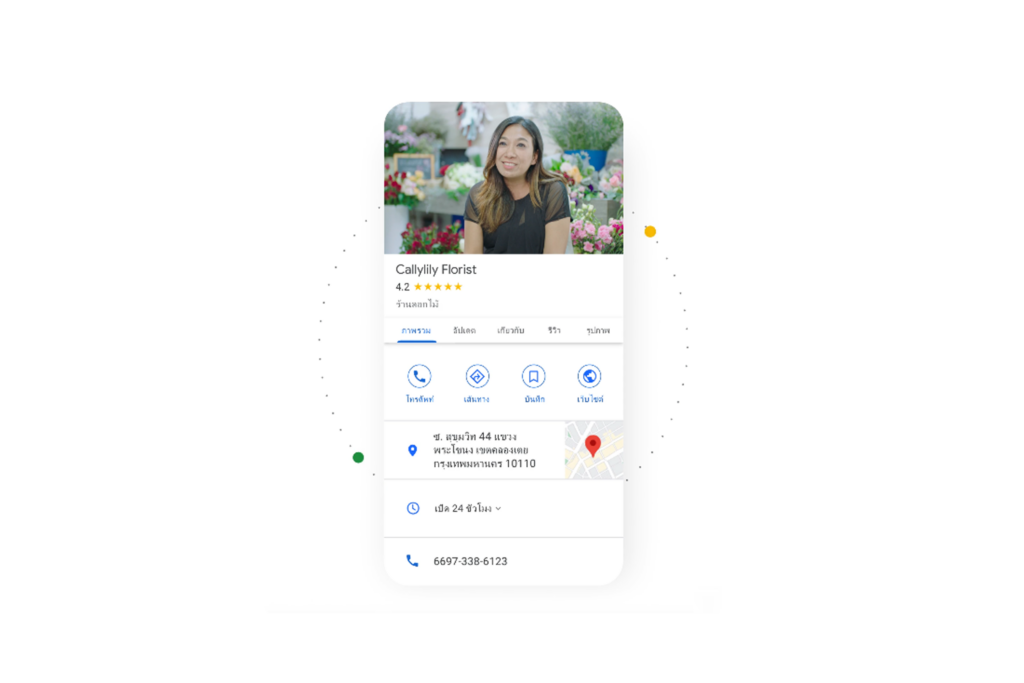
Categories, services, business description, hours, phone number, website, attributes, photos, booking options, and product information can affect how customers interpret the listing and how confidently they act. Google uses profile information to match businesses with relevant searches, while customers use the same information to decide whether the business meets their practical needs.
- Primary category: Defines the central business type.
- Additional categories: Clarify legitimate secondary services.
- Services and products: Show what the business actually provides.
- Hours: Reduce failed visits and unanswered calls.
- Photos: Demonstrate the storefront, staff, facilities, products, or completed work.
- Contact details: Give customers a direct route to call, visit, book, or browse.
How should businesses choose categories, services, descriptions, photos, and contact details?
Businesses should choose the most accurate primary category, add only legitimate secondary categories, and describe services in natural customer language. Google’s representation guidelines require businesses to present themselves accurately and prohibit misleading location or identity information.
Descriptions should explain the service, audience, differentiators, and operating area without turning into a list of repeated keywords. Photos should show current, authentic business conditions rather than generic stock imagery. Contact details should route customers to the relevant location or operating team, particularly when multiple branches share a brand.
How can businesses improve visibility in Google Maps and the Google Local Pack?
Businesses improve Maps and Local Pack visibility by completing verification, maintaining accurate profile information, earning genuine reviews, publishing useful photos, and building supporting relevance across the website and trusted directories. Google says that complete information, reviews, links, and overall prominence contribute to local visibility, although Google does not disclose the full ranking system.
Profile activity should support customer usefulness rather than create artificial signals. A business that updates seasonal hours, adds accurate services, answers questions, and responds to reviews gives customers clearer information while reinforcing the consistency of its local entity.
When should a service-area business hide its address in Google Business Profile?
A service-area business should hide its address when it travels to customers and does not receive customers at the listed location. Google specifically instructs eligible service-area businesses to hide the address and display the areas they serve instead.
A hybrid business that genuinely serves customers at a staffed storefront may display its address and add a service area. Google also limits service-area profiles to legitimate operating areas and does not treat virtual offices as substitutes for real business locations.
Local Website Signals: Keywords, Pages, Citations, Links, and Reviews
Local website signals help search engines connect a business’s services with specific places and customer needs. The strongest local websites combine clear service pages, useful location information, consistent business details, relevant links, review evidence, and technical elements such as schema markup.
How do local keywords and on-page optimization support location-based searches?
Local keywords support location-based searches when they describe the service and place in the language customers actually use. A page for “commercial electrician in Austin” should explain commercial electrical services in Austin rather than repeat the phrase in every heading.
On-page optimization should clarify service scope, neighborhoods or cities served, operating hours, contact routes, credentials, and customer questions. Google’s relevance guidance supports complete and detailed business information, while keyword research reveals the terms and locations worth addressing.
When should businesses create location pages or service-area pages?
Businesses should create a location page when a location represents a real branch, a meaningful service area, or a distinct customer market with unique information. Each page should contain original evidence such as local staff, address details, services available, project examples, directions, nearby areas, or customer-specific FAQs.
Thin pages that swap one city name for another without adding local value can weaken the website’s usefulness. A service-area company should prioritize a smaller set of well-supported area pages over dozens of near-identical pages designed only to capture geographic variations.
How do local citations and consistent business information strengthen local trust?
Local citations strengthen trust when reputable websites consistently identify the business by name, address, phone number, website, and other core details. BrightLocal’s Business Listings Visibility Study analyzed 8,000 local-intent Google results and found that business directories represented 31% of the top ten organic results overall and 37% of informational local-intent results.
Accuracy matters more than collecting every possible directory listing. BrightLocal found that 80% of consumers lose trust when they encounter incorrect or inconsistent business names or contact details online.
How do local link building, online reviews, and Local Business schema support prominence?
Local link building supports prominence when links come from relevant organizations, local news outlets, chambers of commerce, associations, community projects, suppliers, or industry publications. The value comes from contextual relevance and genuine recognition, not from purchasing large quantities of unrelated links.
Online reviews provide customer-generated evidence, while Local Business schema helps search engines interpret structured information about the organization, address, hours, phone number, and services. Schema does not guarantee rankings, but accurate structured data reduces ambiguity when it matches visible page content and official business information.

Local SEO Priorities: What to Do First and When to Expect Results
Local SEO priorities should begin with accuracy and measurement before content expansion or link acquisition. BrightLocal’s expert survey found that 94% of respondents considered significant local ranking improvements achievable within six months for a business in a noncompetitive sector and location.
Which Local SEO tasks should a business complete in the first 30 days?
During the first 30 days, a business should verify its Google Business Profile, correct core details, select accurate categories, define eligible service areas, audit major citations, confirm website contact information, and establish baseline measurements.
- Verify profile ownership and remove access held by former managers.
- Record current calls, website leads, direction requests, reviews, and ranking visibility.
- Correct name, address, phone number, hours, website, categories, and service details.
- Identify duplicate listings and inaccurate directory records.
- Improve the primary location or service page with useful, locally relevant information.
What should businesses improve during months two and three?
During months two and three, businesses should strengthen service pages, publish genuinely useful location content, request authentic reviews through compliant processes, respond to existing reviews, earn relevant local links, and test conversion paths such as calls, forms, bookings, and directions.
The sequence matters. A business should not invest heavily in promotional content while customers still encounter an incorrect phone number or missing hours. Correct data and usable conversion paths turn later visibility gains into measurable opportunities.

How long does Local SEO take to improve Maps visibility, rankings, and conversions?
Local SEO results typically emerge at different speeds across different surfaces. Profile edits may appear quickly after approval, while competitive Maps visibility, organic rankings, review growth, and revenue attribution require sustained activity and measurement.
| Time frame | Reasonable focus | What to evaluate |
|---|---|---|
| First 30 days | Accuracy, verification, tracking, and technical corrections | Profile completeness, data errors, baseline actions |
| Months two and three | Content, reviews, citations, links, and conversion improvements | Impressions, calls, direction requests, leads |
| Months four to six | Competitive expansion and refinement | Non-brand visibility, qualified leads, revenue trends |
Which Local SEO metrics matter beyond rankings?
Useful Local SEO metrics include calls, direction requests, website visits from local listings, appointment bookings, contact-form submissions, qualified leads, review volume, average rating, response rate, non-brand impressions, and revenue from tracked customers. Rankings provide diagnostic context, but actions and customer value determine commercial performance.
Local SEO Measurement: Connecting Search Visibility to Business Outcomes
Local SEO measurement connects search visibility to business outcomes by linking profile interactions, website behavior, customer records, and revenue data. A business should define what constitutes a valuable local action before it evaluates whether visibility is improving.
How should businesses track calls, direction requests, website visits, and map visibility?
Businesses should track calls with dedicated but consistent numbers, record form submissions and bookings in analytics, monitor Google Business Profile interactions, and use location-based rank tracking to compare visibility across a defined geographic grid. Google identifies calls and direction requests as quantifiable local actions that can be measured from local listings or ads.
Map visibility should be measured from multiple points around the service area because a business may rank strongly near its address and weakly several miles away. A single manually checked ranking cannot represent the full local market.
How can review volume, rating quality, and response activity be measured?
Businesses can measure review performance through new review count, average rating, rating distribution, review recency, response rate, response time, and the percentage of reviews receiving a response. BrightLocal’s 2024 survey found that consumers strongly prefer businesses that respond to all reviews, making response activity both a reputation and conversion metric.
Review analysis should also identify recurring service themes. Mentions of wait times, staff, cleanliness, communication, or workmanship can show which operational improvements influence future customer sentiment.
How do conversion tracking and customer records reveal Local SEO revenue?
Conversion tracking reveals Local SEO revenue by connecting a source or landing page to a call, form submission, booking, sale, or customer record. Businesses with offline transactions should ask new customers how they found the company, use call tracking carefully, and match lead records to closed revenue.
This approach separates high-volume but low-value traffic from commercially useful visibility. A service page that generates fewer visits but produces qualified appointments may outperform a broader page that attracts many unqualified searches.
Local SEO Pitfalls: When Common Tactics Fail
Common Local SEO tactics fail when they prioritize manipulation, volume, or keyword repetition over accurate customer information. Google’s local guidelines reward relevance and trust, while misleading practices can remove visibility or create customer skepticism.
Why do inconsistent business details weaken local visibility?
Inconsistent business details weaken local visibility because search engines and customers receive conflicting signals about the entity. Incorrect names, phone numbers, addresses, hours, or websites can cause failed calls, missed visits, duplicate records, and reduced confidence.
BrightLocal found that 80% of consumers lose trust when they see inconsistent business names or contact details online. The finding applies to both ranking support and conversion quality: an accurate listing that customers cannot act on still produces a poor business outcome.
What risks come from duplicate listings, keyword stuffing, or fake reviews?
Duplicate listings can split reviews and engagement, keyword stuffing can make business names or descriptions misleading, and fake reviews can trigger moderation or restrictions. Google states that fake or misleading reviews may be removed and that Business Profiles may face restrictions for policy violations.
Google also prohibits paid or incentivized reviews, selective pressure for positive ratings, and reviews that do not represent genuine experiences. Businesses should request honest feedback without dictating the rating, wording, or outcome.
When can location pages harm performance instead of helping it?
Location pages can harm performance when they provide no unique value, target areas the business does not serve, repeat identical copy, or create confusing internal competition. A page should answer a real geographic need with evidence that the business can serve that market.
For a service-area business, publishing dozens of city pages without staff, projects, service information, or operational coverage creates a mismatch between search promise and customer experience. Fewer, stronger pages provide a more defensible foundation.
Next Steps: Build a Local SEO Strategy Around Customer Journeys
A durable Local SEO strategy follows the customer journey from discovery to evaluation, contact, visit, purchase, review, and repeat business. Search is only one part of that path, so local optimization should connect with paid search, useful content, customer service, reputation management, and accurate operational data.
How can businesses connect Local SEO with paid search, content, and reputation management?
Businesses can connect Local SEO with paid search by using consistent locations, services, hours, calls, landing pages, and conversion goals across organic and paid campaigns. Content should answer local customer questions, while reputation management should turn operational feedback into service improvements and thoughtful responses.
BrightLocal’s research found that consumers frequently use multiple review sites during local-business decisions: 41% used three or more review sites and 36% used two. A reputation program should therefore monitor the platforms customers actually use instead of treating Google reviews as the only source of trust.

Which advanced Local SEO opportunities should growing businesses evaluate next?
Growing businesses should evaluate branch-level reporting, local inventory visibility, appointment integrations, structured data, review sentiment analysis, neighborhood-level search behavior, customer lifetime value by location, and content that demonstrates local expertise. Multi-location organizations should also compare branches against one another without allowing strong locations to conceal weak customer experiences elsewhere.
The next analytical step is to connect every local search action with operational capacity. If a campaign increases calls but the team cannot answer them, visibility has exposed a service bottleneck rather than created sustainable growth. If review themes reveal repeated scheduling problems, reputation data has become an operational planning tool. Local SEO becomes most valuable when search visibility, customer experience, and revenue records inform the same decision-making process.
Related: local SEO services.
Sign in to share. Facebook and LinkedIn need the article page to be publicly accessible to show its preview. If an AI cannot open the page, copy the article text from the section above.