
Choose an AI service. ChatGPT and Perplexity submit the summary request, Grok opens it ready to send, and other services open with the request copied as a fallback. If an AI cannot open the page, copy the article text and paste it into the chat.
This question has been thrown at SEOs since link building began, and it is one our team hears from new clients all the time. The honest answer is that there is no single number: how long link building takes to move rankings depends on a handful of variables that are different for every site, every link, and every niche.
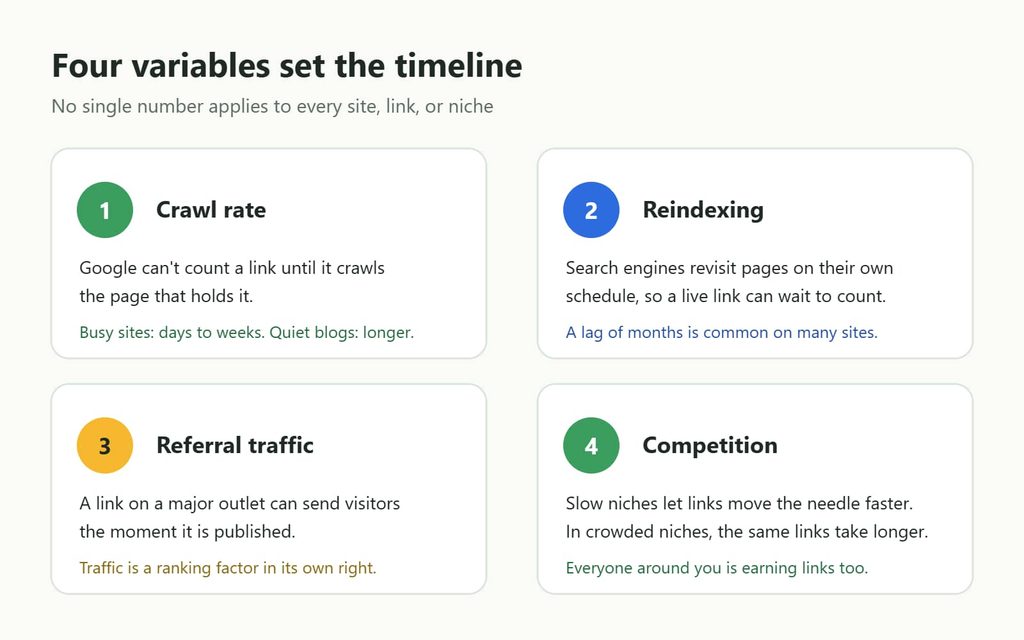
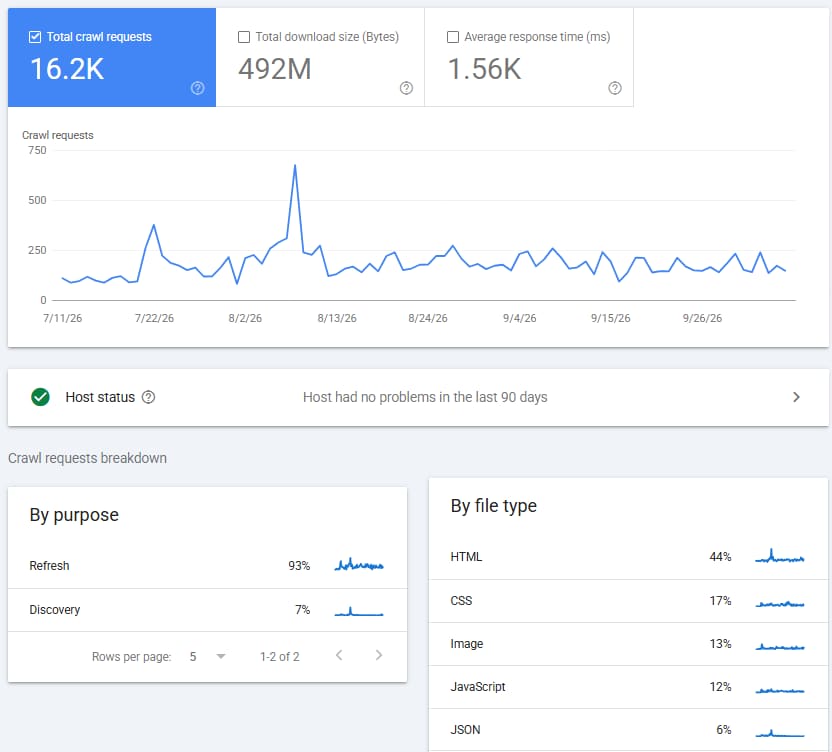
The first variable is the crawl rate of the site you place the link on, and these vary wildly from site to site. Google cannot count a link until it has crawled the page that holds it. A fast-moving publication that gets indexed constantly like a local news site will pick a new link up within days, while a quiet blog that is rarely crawled can sit for far longer before Google even sees it. Crawl stats can be viewed in your server logs, but Google Search Console will also give you googlebot data so you can see your crawl stats. Here is an example, so in 3 months around 16k requests with only 7% discovery, which is adding new pages to the index. So that is around 12 a day, so a link on this site would get picked up quickly on new content.
The second variable is reindexing. Search engines do not constantly rescan every page on the web; they reindex on their own schedule, which for many sites is every three to four months. So even once a link goes live, there is often a lag before it shows up in rankings, simply because the page has not been reindexed into the knowledge graph yet. Google refers to these events as core updates and it is where the algorithm applies all the new ranking signals since the last update. Learn more about Google updates from this guide.
Then there is the value of the link itself, which is not purely about rankings. A link on a major outlet such as the Bangkok Post can drive instant referral traffic the moment it is published, and traffic is a ranking factor in its own right. That means a link can start helping you well before it has fully settled into the algorithm and is why outreach should be part of your link building strategy.
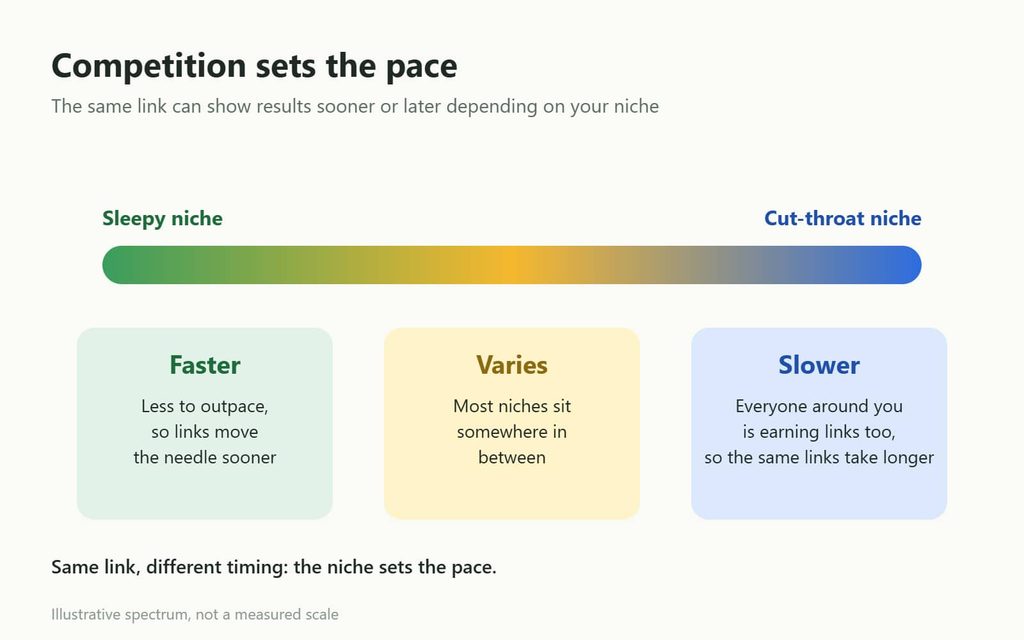
On top of all this, the whole picture is relative to your competitors in your niche. In a sleepy niche with slow competition, links tend to move the needle faster because there is less to outpace. In a cut-throat niche, the same links can take longer to show because everyone around you is also earning them.
So what can you realistically expect? A fair working estimate is a minimum of four months, because that is roughly the cadence of a core update where Google reindexes the web. Results can come sooner in favourable conditions, but setting expectations around that four-month baseline is the honest position.
That is the message our SEO specialists at TBS Marketing give new prospects when this question comes up. It is not a way of dodging a straight answer; it is the straight answer. Setting expectations correctly from the outset, and not over-promising timelines, is how we build campaigns that last. Some campaigns fly out of the blocks, some take a little longer, but patience combined with the right links gets to the same end point.
Related reading
- Why SEO Takes Time and Why That Is Not a Bad Thing
- How to Create an Effective SEO Strategy
- Top 42 SEO Tools
If you are ready to put the right link-building strategy to work for your business, take a look at our SEO services.
Sign in to share. Facebook and LinkedIn need the article page to be publicly accessible to show its preview. If an AI cannot open the page, copy the article text from the section above.