
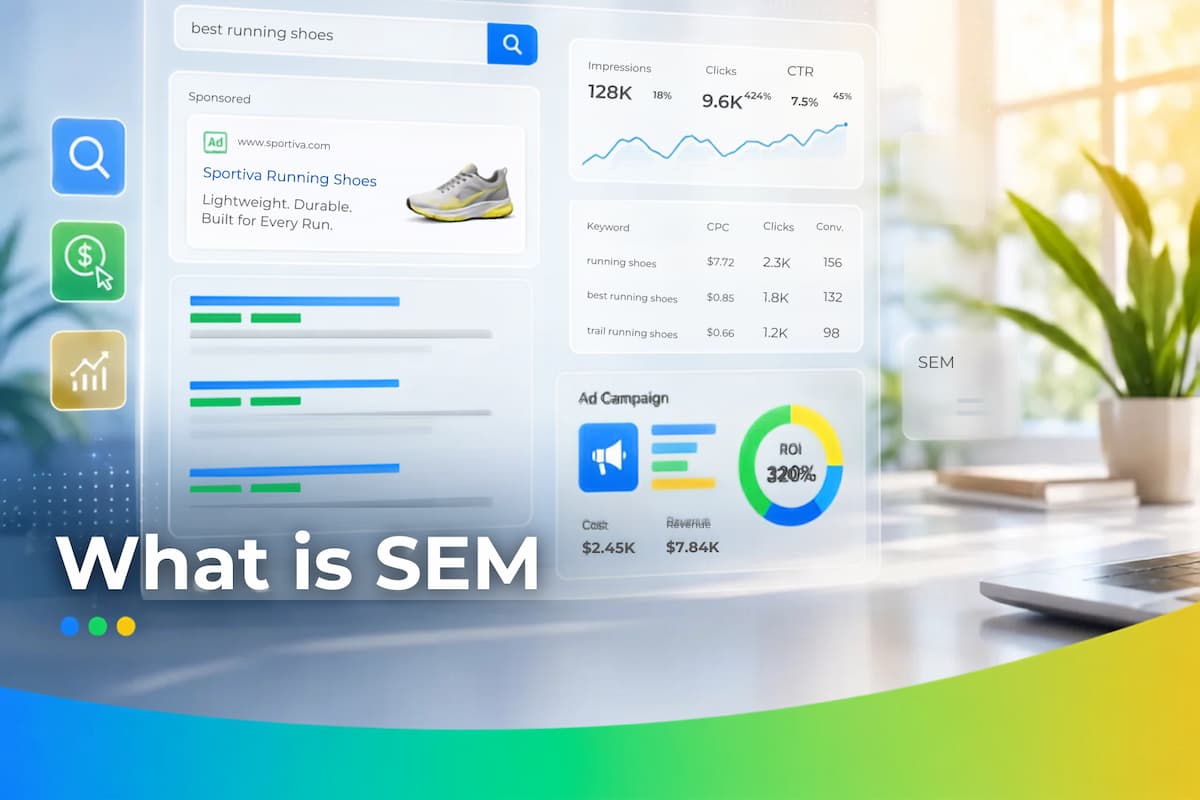
What is SEM? Search Engine Marketing Explained: Types, Benefits, and Strategies
Search Engine Marketing (SEM) can be defined as a digital marketing strategy that involves promoting websites by increasing their visibility on search engine results pages (SERPs) through paid advertising. SEM primarily focuses on pay-per-click (PPC) campaigns, where advertisers bid on keywords to display their ads to targeted audiences. According to a 2023 report by Statista, global digital ad spending on SEM is projected to reach $280 billion by 2025, highlighting its growing importance in the marketing landscape.
In this article, we'll explore what SEM is, its key components, benefits, and how it differs from SEO. We'll also provide actionable strategies to help businesses in Bangkok and beyond leverage SEM for maximum ROI.
What is SEM?
Search Engine Marketing (SEM) is a comprehensive approach to gaining visibility on search engines like Google, Bing, and Yahoo. It combines paid advertising (PPC) and organic search efforts to drive traffic, generate leads, and increase conversions. SEM allows businesses to target specific keywords, demographics, and locations, making it a highly effective tool for reaching the right audience at the right time.
Key Components of SEM
1. Pay-Per-Click (PPC) Advertising
PPC is the cornerstone of SEM. Advertisers bid on keywords relevant to their business, and their ads appear at the top of SERPs when users search for those terms. Google Ads is the most popular PPC platform, offering advanced targeting options and measurable results.
2. Keyword Research
Effective SEM campaigns rely on thorough keyword research. Tools like Google Keyword Planner and SEMrush help identify high-volume, low-competition keywords that align with your business goals.
3. Ad Copy and Creatives
Compelling ad copy and visuals are essential for attracting clicks. Ads should include a clear call-to-action (CTA), relevant keywords, and a unique selling proposition (USP).
4. Landing Pages
A well-optimized landing page ensures that visitors convert after clicking on your ad. It should be fast-loading, mobile-friendly, and aligned with the ad's messaging.
5. Analytics and Tracking
SEM campaigns require continuous monitoring and optimization. Tools like Google Analytics and Google Ads provide insights into performance metrics such as click-through rates (CTR), conversion rates, and return on ad spend (ROAS).
Benefits of SEM
1. Immediate Results
Unlike SEO, which can take months to show results, SEM delivers instant visibility. Your ads can appear on SERPs as soon as your campaign goes live.
2. Targeted Advertising
SEM allows you to target specific audiences based on location, demographics, interests, and even device type. This ensures your ads reach the most relevant users.
3. Measurable ROI
With SEM, every dollar spent can be tracked and measured. You can see exactly how much revenue your campaigns generate, making it easier to justify your marketing budget.
4. Increased Brand Awareness
Even if users don't click on your ads, seeing your brand at the top of SERPs can boost recognition and trust.
5. Flexibility and Control
SEM campaigns can be adjusted in real-time based on performance. You can pause underperforming ads, increase bids on high-performing keywords, or test new creatives.
SEM vs. SEO: What's the Difference?
While both SEM and SEO aim to increase visibility on search engines, they differ in approach and execution:
- SEM: Focuses on paid advertising and delivers immediate results. It requires a budget for ad spend and offers precise targeting options.
- SEO: Focuses on organic search efforts and takes longer to show results. It involves optimizing website content, technical SEO, and building backlinks.
For businesses in competitive markets like Bangkok, combining SEM and SEO can create a powerful digital marketing strategy.
Types of SEM Campaigns
1. Search Ads
Text-based ads that appear at the top of SERPs. They are highly effective for driving targeted traffic.
2. Display Ads
Visual ads that appear on websites within the Google Display Network. They are ideal for building brand awareness.
3. Shopping Ads
Product-based ads that appear in Google Shopping results. They include product images, prices, and reviews, making them perfect for e-commerce businesses.
4. Video Ads
Ads that appear on YouTube and other video platforms. They are great for engaging audiences with dynamic content.
SEM Strategies for Businesses in Bangkok
1. Localized Targeting
Use geo-targeting to focus on Bangkok-specific keywords and locations. For example, "best digital marketing agency in Bangkok" or "affordable SEM services in Thailand."
2. Seasonal Campaigns
Leverage local events and holidays like Songkran or Loy Krathong to create timely, relevant campaigns.
3. Competitor Analysis
Analyze your competitors' SEM strategies using tools like SpyFu or Ahrefs. Identify their top-performing keywords and ad copy to refine your own campaigns.
4. A/B Testing
Test different ad creatives, CTAs, and landing pages to determine what resonates best with your audience.
5. Retargeting
Use retargeting ads to re-engage users who have previously visited your website but didn't convert.
Why Choose TBS Marketing Agency for SEM?
At TBS Marketing Agency, we specialize in creating data-driven SEM campaigns tailored to your business needs. Our team of experts in Bangkok combines cutting-edge tools with local market insights to deliver measurable results. Whether you're a small business or a large enterprise, we'll help you maximize your ROI and achieve your marketing goals.
Conclusion
Search Engine Marketing (SEM) is a powerful tool for businesses looking to increase visibility, drive traffic, and generate leads. By understanding its key components, benefits, and strategies, you can create effective campaigns that deliver real results.
Ready to take your digital marketing to the next level? Contact TBS Marketing Agency today to learn how we can help you dominate the search engine landscape in Bangkok and beyond.
