
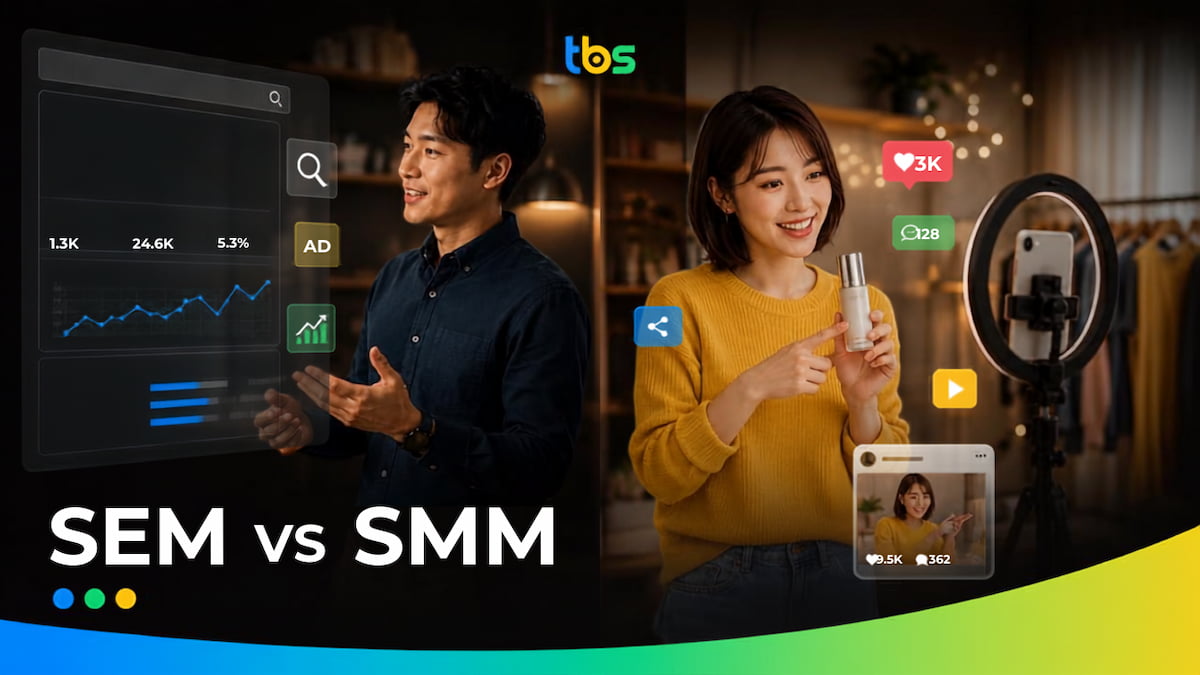
SEM vs SMM: What They Are, Key Differences, Benefits, and Which to Choose for Your Business
In today's digital-first world, businesses in Bangkok and beyond are constantly seeking effective ways to reach their target audience. Two of the most popular strategies are Search Engine Marketing (SEM) and Social Media Marketing (SMM). But what exactly are they, and how do they differ? More importantly, which one should your business invest in?
In this article, we'll break down the key differences between SEM and SMM, explore their benefits and drawbacks, and help you decide which strategy aligns best with your business goals. Whether you're a startup or an established brand in Bangkok, this guide will provide actionable insights to elevate your marketing game.
What is SEM?
Search Engine Marketing (SEM) is a digital marketing strategy that focuses on increasing a website's visibility on search engine results pages (SERPs) through paid advertising. The most common platform for SEM is Google Ads, where businesses bid on keywords to display ads to users searching for related terms.
Key Components of SEM
- Pay-Per-Click (PPC) Advertising: You pay only when someone clicks on your ad.
- Keyword Research: Identifying high-intent keywords your target audience is searching for.
- Ad Copy Optimization: Crafting compelling ad text to drive clicks and conversions.
- Landing Pages: Creating dedicated pages that align with your ad's message to maximize conversions.
What is SMM?
Social Media Marketing (SMM) involves promoting your brand, products, or services on social media platforms like Facebook, Instagram, LinkedIn, and TikTok. SMM focuses on building brand awareness, engaging with your audience, and driving traffic through organic and paid social media campaigns.
Key Components of SMM
- Content Creation: Developing visually appealing and engaging posts tailored to each platform.
- Community Engagement: Interacting with followers through comments, messages, and shares.
- Paid Social Ads: Running targeted ad campaigns to reach specific demographics.
- Analytics and Reporting: Tracking performance metrics like engagement rates, reach, and conversions.
SEM vs SMM: Key Differences
| Aspect | SEM | SMM |
|---|---|---|
| Primary Goal | Drive immediate traffic and sales | Build brand awareness and engagement |
| Platforms | Google, Bing, Yahoo | Facebook, Instagram, LinkedIn, TikTok |
| Cost Structure | Pay-per-click (PPC) | Pay-per-impression or pay-per-click |
| Targeting | Keyword-based | Demographic and interest-based |
| ROI Speed | Faster ROI | Slower, long-term ROI |
Benefits of SEM
- Immediate Results: SEM can drive traffic to your website almost instantly.
- High Intent Audience: Users searching for specific keywords are more likely to convert.
- Measurable ROI: Tools like Google Ads provide detailed analytics to track performance.
- Local Targeting: Ideal for businesses in Bangkok targeting local customers.
Benefits of SMM
- Brand Awareness: Social media helps you reach a broader audience and build brand loyalty.
- Engagement: Direct interaction with your audience fosters trust and community.
- Cost-Effective: Organic social media efforts can yield significant results without a large budget.
- Visual Appeal: Platforms like Instagram and TikTok allow for creative, visually-driven campaigns.
Which Should You Choose?
When to Choose SEM
- You want immediate results and leads.
- Your business relies on high-intent searches (e.g., "hotels in Bangkok").
- You have a budget for paid advertising and want measurable ROI.
When to Choose SMM
- Your goal is to build long-term brand awareness.
- Your target audience is active on social media platforms.
- You want to engage with your audience and create a community around your brand.
Why Not Both?
For many businesses, a combination of SEM and SMM yields the best results. SEM can drive immediate traffic and conversions, while SMM builds long-term brand loyalty and engagement. At TBS Marketing Agency, we specialize in creating integrated digital marketing strategies tailored to your business needs.
Conclusion
Both SEM and SMM are powerful tools in the digital marketer's arsenal, but they serve different purposes. SEM is ideal for driving quick results and targeting high-intent users, while SMM excels at building brand awareness and fostering engagement.
If you're unsure which strategy is right for your business, TBS Marketing Agency is here to help. Based in Bangkok, we offer expert guidance and customized solutions to help you achieve your marketing goals. Contact us today to learn more!